2026 Best Asphalt Bending Beam Rheometer Buying Guide

Time:2026-10-13 Author:Sophia
0%

Choosing the right Asphalt Bending Beam Rheometer in 2026 requires more than comparing prices and brochures. This instrument evaluates asphalt binder stiffness and m-value at low temperatures, helping laboratories assess cracking resistance. A reliable buying decision should connect test performance with daily laboratory conditions.

This guide examines measurement accuracy, temperature control, loading stability, calibration records, and software usability. It also considers standards such as ASTM D6648 and AASHTO T313, which support consistent bending beam testing. Experienced technicians often notice practical details first: a stable thermal chamber, clear specimen positioning, and fixtures that are easy to clean. Details matter.

The best model depends on your workload, testing range, staff experience, and quality requirements. A small laboratory may value simple operation and responsive service. A research facility may require automated data handling, broader temperature control, and stronger reporting functions. Ask about installation, preventive maintenance, training, and replacement parts before purchasing.

Do not trust impressive specifications alone. Request verification data, calibration procedures, and realistic demonstrations using suitable binder samples. No buying guide can remove every uncertainty. That is worth remembering. Some products appear similar, yet their temperature recovery, software design, or after-sales support may differ significantly. A careful buyer should compare documented performance with actual laboratory needs, not marketing language. This 2026 guide provides a practical framework for making that comparison with greater confidence and fewer expensive surprises.
2026 Best Asphalt Bending Beam Rheometer Buying Guide

What Is an Asphalt Bending Beam Rheometer and Why Does It Matter?

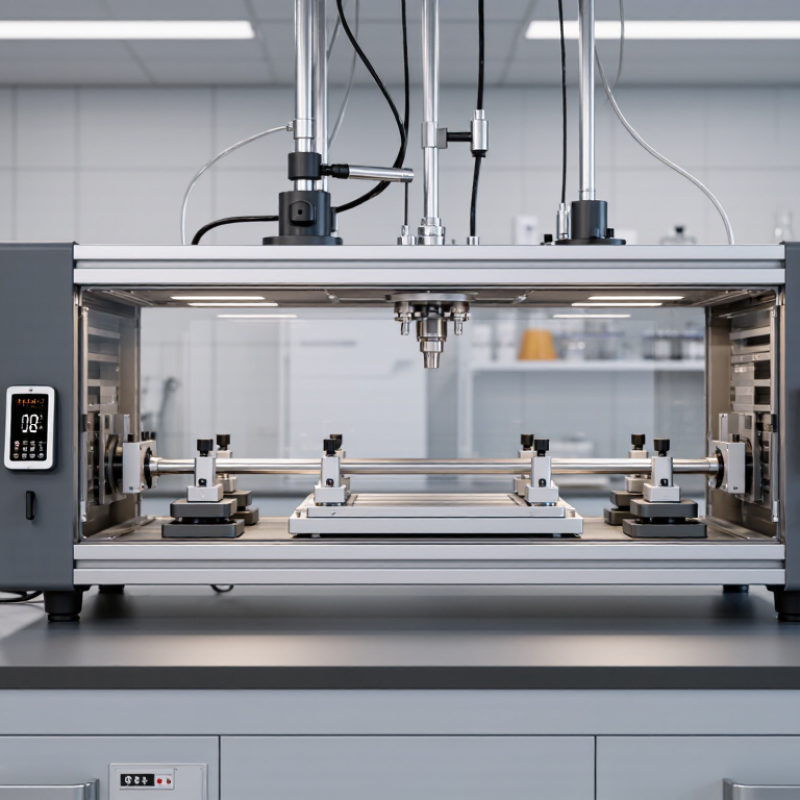
An asphalt Bending Beam Rheometer (BBR) measures how asphalt binder behaves in cold conditions. At low temperatures, binder stiffness can increase sharply. A small asphalt beam rests on supports inside a temperature-controlled bath. A constant load bends it for 240 seconds. The instrument records stiffness and the m-value, which describes stress relaxation. These results help engineers assess thermal cracking risk in pavement.

Why does it matter?

A binder may perform well during summer but become too rigid during a winter night. Excessive stiffness can create cracks as the pavement contracts.

When comparing a BBR for 2026, check temperature stability, loading accuracy, beam support design, and software traceability. The system should follow recognized procedures, such as ASTM D6648 or AASHTO T313. Calibration records and service access matter as much as advertised resolution.

Reliable testing requires disciplined preparation. Technicians must control beam dimensions, conditioning time, bath circulation, and loading alignment. Even a thin film of excess material can affect the result. A clean temperature curve is essential.

Do not trust attractive numbers blindly. A precise instrument can still produce weak evidence when the specimen is poorly molded. My practical concern is often overlooked: busy laboratories need simple fixtures, clear prompts, and repeatable cleaning procedures. Otherwise, small mistakes quietly become design decisions.

Which Technical Specifications Define a Reliable BBR?

A reliable Asphalt Bending Beam Rheometer begins with controlled loading, temperature, and measurement. ASTM D6648 and AASHTO T 313 specify a 980 mN beam load, with a tolerance of ±50 mN. The system should maintain bath temperature within about ±0.1°C. Even small temperature drift can distort low-temperature creep results. Look for displacement resolution near 1 micrometre, stable beam supports, and automatic compliance correction. These details matter more than a glossy enclosure.

AASHTO M 320 evaluates binder performance through creep stiffness and m-value after 60 seconds. The typical limits are S ≤300 MPa and m-value ≥0.300. Testing commonly occurs at pavement-design temperatures, such as −18°C, −24°C, or −30°C.

NCHRP Report 673 emphasizes consistent thermal conditioning and reliable BBR data for performance grading. FHWA Long-Term Pavement Performance analyses also connect low-temperature binder behavior with field cracking risk. The instrument should therefore record the complete load and deflection curve, not only final values.

Practical verification is essential. Ask for calibration records, temperature-mapping results, software audit trails, and raw-data export. Check whether the bath recovers quickly after opening. A low purchase price can look attractive, but unstable cooling creates expensive retesting. I would not trust impressive specifications without repeatability evidence. That is the uncomfortable part. ASTM compliance on paper does not guarantee disciplined laboratory practice.

How to Compare BBR Models, Features, and Testing Performance

When comparing Asphalt Bending Beam Rheometer models, focus on measured performance, not brochure claims. A compliant unit follows AASHTO T313 or ASTM D6648, applies a controlled 980 mN load, and records creep stiffness for 60 seconds. Temperature stability matters greatly. A drift of only 0.1°C can influence low-temperature results.

Review each model’s load accuracy, displacement resolution, bath uniformity, and calibration process. AASHTO M320 commonly evaluates stiffness below 300 MPa and an m-value of at least 0.300. The FHWA Long-Term Pavement Performance program contains data from more than 2,500 monitored pavement sections, showing why reliable low-temperature testing remains important for cracking analysis. Ask whether the software exports raw curves, flags invalid specimens, and preserves audit trails.

Testing performance also depends on practical details. Check how quickly the bath reaches -16°C, -22°C, and -28°C. Check specimen alignment by hand. It should feel repeatable, not forced. ASTM D6648 emphasizes controlled conditioning and precise deformation measurement, so weak thermal recovery can undermine otherwise accurate hardware. I would compare repeatability data from multiple operators, not one perfect demonstration. That evidence is often missing. A quieter frame, simpler calibration, and stable software may be more valuable than extra features. Allow space for operator training, because even a precise BBR can produce questionable results when trimming, loading, or temperature equilibration is inconsistent.

What Should You Check Before Buying an Asphalt BBR?

Before buying an asphalt Bending Beam Rheometer, check whether it follows ASTM D6648 and AASHTO T313 procedures. The apparatus should control the test bath near the target temperature and keep variation within the applicable standard limits. Temperature stability matters. A small drift can change low-temperature stiffness results.

Confirm the system supports a 240-second loading period and records stiffness and m-value at 60 seconds. Under AASHTO M 320, common acceptance limits are creep stiffness of 300 MPa maximum and an m-value of 0.300 minimum.

Also check the load cell range, displacement resolution, beam support spacing, and specimen dimensions of approximately 125 × 12.5 × 6.25 millimeters. These details affect repeatability more than a polished interface.

Ask for calibration records, traceable reference weights, and proof of software updates. The FHWA Long-Term Pavement Performance program uses climate data with 98% reliability for pavement temperature selection, so your laboratory needs accurate thermal control across its local grading range.

Service response matters too. A failed bath sensor can stop testing for days. I have seen equipment meet specifications but perform poorly after rushed specimen preparation. That risk deserves attention. Review interlaboratory precision data, operator training, and installation requirements before approval. A cheaper unit may create expensive uncertainty.

How to Evaluate Suppliers, Costs, Installation, and After-Sales Support

A 2026 asphalt bending beam rheometer purchase should begin with test reliability, not price. ASTM D6648 and AASHTO T 313 define key BBR testing practices, including low-temperature stiffness and relaxation behavior. Ask suppliers for calibration records, uncertainty budgets, and recent verification results. Their software should export raw data, not only polished charts. That small detail can matter during audits.

Cost evaluation must include the complete ownership cycle. Compare the rheometer, cooling bath, temperature sensors, computer, freight, installation, training, calibration, and annual service. A low quotation may become expensive after sensor replacement or software renewal. FHWA’s Long-Term Pavement Performance program contains data from more than 2,500 pavement sections, showing why consistent, traceable testing supports long-term material decisions. Still, field performance is not created by one instrument alone. I would avoid pretending that a perfect laboratory result guarantees perfect pavement behavior.

Tips: Ask for raw data. Request three itemized quotations. Check response time. Confirm spare-part availability and technician coverage in your region. The installation area should have a stable bench, clean power, controlled temperature, and enough space for safe specimen handling. Require supplier training with a real asphalt binder sample, not only slides. A useful acceptance test can compare repeated measurements against your laboratory’s existing procedure. If results disagree, investigate loading alignment, bath stability, specimen preparation, and operator technique before blaming the equipment. Supplier promises sound reassuring, but documented evidence is stronger.

2026 Best Asphalt Bending Beam Rheometer Buying Guide

Recommended supplier-evaluation weighting for a Bending Beam Rheometer (BBR) used for low-temperature asphalt binder testing under ASTM D6648 or AASHTO T313.

Give the greatest weight to compliance with the applicable test standard, temperature-control stability, and measurement accuracy. Also compare the total cost of ownership, including installation, calibration, operator training, spare parts, warranty coverage, and response time for after-sales service.

FAQS

What does an asphalt bending beam rheometer measure?

It measures low-temperature binder stiffness and stress relaxation. These values help estimate thermal cracking risk.

How does the test work?

A small asphalt beam rests on two supports. A constant load bends it for 240 seconds in a controlled bath.

Why is low-temperature stiffness important?

Cold binder can become very rigid. As pavement contracts, excessive stiffness may create cracks during winter nights.

What should buyers check when comparing equipment?

Check temperature stability, loading accuracy, support design, and software traceability. Calibration records matter too.

Does precise equipment guarantee reliable results?

No. Poor molding, uneven loading, or unstable bath temperature can weaken the evidence. Attractive numbers can mislead.

How should technicians prepare specimens?

Control beam dimensions, conditioning time, bath circulation, and loading alignment. Remove thin excess material from the specimen.

What costs should a laboratory include?

Include the instrument, cooling bath, sensors, computer, shipping, installation, training, calibration, and annual service.

What should supplier software provide?

It should export raw data, not only polished charts. Raw files support audits and independent review.

What installation conditions are needed?

Use a stable bench, clean power, controlled room temperature, and enough space for safe specimen handling.

How can a laboratory verify new equipment?

Repeat measurements and compare them with an existing procedure. If results disagree, check preparation and alignment before blaming the instrument.

Conclusion

This 2026 buying guide explains how an Asphalt Bending Beam Rheometer helps laboratories evaluate the low-temperature stiffness and stress-relaxation behavior of asphalt binders. It outlines why BBR testing matters for understanding thermal cracking performance and introduces the key specifications of a reliable system, including temperature control accuracy, loading stability, measurement sensitivity, software functionality, calibration options, and data repeatability.

The guide also shows how to compare BBR models by examining testing performance, automation, sample handling, operating range, safety features, and ease of maintenance. Before purchasing, users should confirm that the instrument meets their testing standards, workload, laboratory space, power requirements, and future expansion needs. It also explains how to assess suppliers by reviewing total cost, installation, training, warranty coverage, spare parts availability, technical support, and response times. A careful evaluation of both equipment capability and long-term service can help laboratories select a dependable solution that delivers consistent results and efficient daily operation.


Sophia

Sophia

Sophia is a dedicated marketing professional with an exceptional depth of knowledge about her company's products and services. With a keen understanding of market trends and customer needs, she crafts insightful blog posts that not only inform but also engage readers, enriching the company’s online......