Choosing the China best Dutch Cone Penetrometer for global buyers requires more than comparing online prices. It demands practical testing, engineering judgment, and evidence from dependable manufacturers. A suitable instrument should deliver stable penetration resistance readings, accurate depth records, and reliable performance across different soil conditions.
In field use, details matter. Operators may work beside a road, on a construction site, or across uneven ground after heavy rain. The frame should remain steady, while the rods, cone, drive system, and measuring unit should tolerate repeated loading. Clear displays help reduce reading errors. Simple maintenance also matters when spare parts are far from the project.
Not every attractive specification proves quality. That is easy to forget. Buyers should review calibration certificates, material information, inspection records, and previous export experience. Factory communication can reveal much. Does the supplier explain testing limits clearly? Can it provide operation manuals, packing photographs, and realistic delivery schedules? These questions support a more reliable decision.
A professional comparison should also consider cone dimensions, testing depth, penetration force, data recording, portability, and optional accessories. Independent verification is valuable when technical claims seem unusually strong. Customer feedback deserves attention, although it may not reflect every soil environment. Even experienced buyers can overlook after-sales response time.
This guide examines how global purchasers can evaluate China-made Dutch Cone Penetrometer equipment with care. It focuses on measurable performance, supplier credibility, field practicality, and long-term value rather than marketing language. The final choice may not be the cheapest model. It should be the one that performs consistently, arrives properly documented, and fits the project’s actual geotechnical requirements.
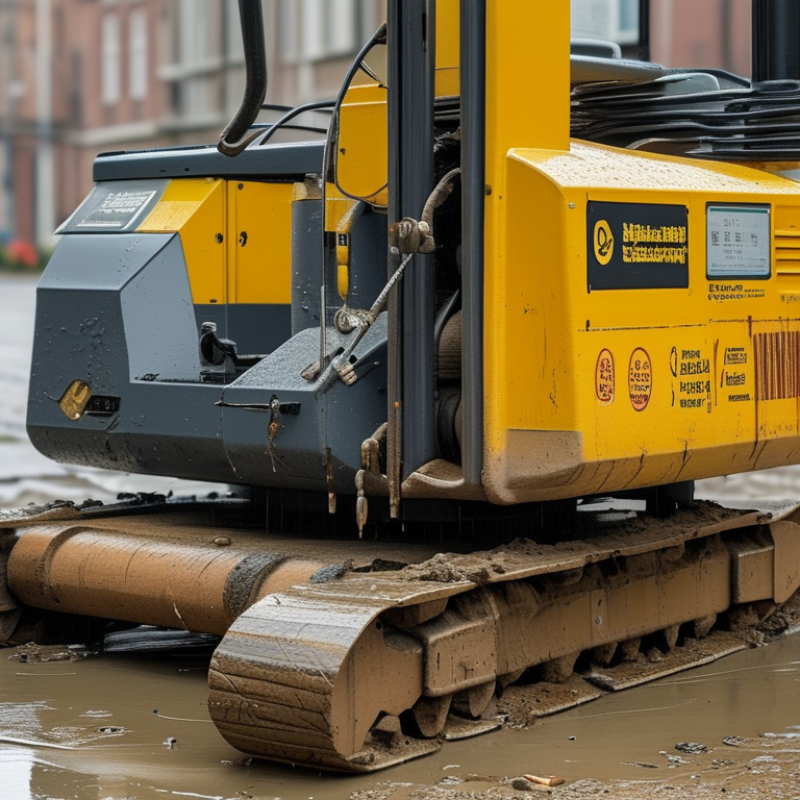
A Dutch Cone Penetrometer is a field device for examining soil strength below ground. It uses a cone-shaped tip, steel rods, and a controlled pushing system. As the cone enters the soil, technicians measure penetration resistance. Some systems also measure sleeve friction. These readings help identify soil layers, estimate bearing capacity, and assess foundation risks. The equipment is useful for roads, buildings, embankments, and site investigations.
The testing principle is direct but requires discipline. An operator pushes the cone at a steady rate and records resistance at set depth intervals. The results are plotted against depth, creating a practical soil profile. Hard layers produce higher resistance, while loose or soft layers usually produce lower values. Experienced technicians check vertical alignment, rod condition, zero readings, and calibration before testing. For global buyers comparing Chinese equipment, documentation matters as much as price. Ask for calibration records, test procedures, material details, and spare-part support. Field conditions are rarely perfect. A rushed setup can distort the data, and even skilled interpretation may need laboratory confirmation.
Tips: Keep the frame stable. Mark every depth clearly. Protect rods from bending. Match the test method to local standards. Review unusual readings instead of forcing them into a convenient conclusion.
| Technical Dimension | Verified Technical Information | Why It Matters to Global Buyers |
|---|---|---|
| Definition | A Dutch cone penetrometer, commonly called a cone penetration test (CPT) system, is an in-situ geotechnical testing instrument that pushes an instrumented cone vertically into the ground at a controlled rate while continuously recording soil resistance. | It provides a continuous soil profile with less soil disturbance than conventional borehole sampling and can support faster preliminary ground investigations. |
| Primary Purpose | The test is used to identify soil layering and estimate engineering parameters such as cone resistance, sleeve friction, pore-water pressure, soil behavior type, and bearing capacity. | Suitable for foundation studies, road and railway projects, embankments, retaining structures, ports, land reclamation, and environmental site characterization. |
| Testing Principle | A cone assembly is hydraulically pushed into the soil at a standard penetration rate of approximately 20 mm/s. Sensors measure the resistance generated at the cone tip and along the friction sleeve. In piezocone testing, a porous filter also measures pore-water pressure. | A controlled penetration rate improves repeatability and allows results from different test locations to be compared more consistently. |
| Standard Cone Geometry | Standard CPT equipment generally uses a cone tip area of 10 cm² and a cone apex angle of 60°. Larger cones, including approximately 15 cm² or more, may be selected for difficult ground or higher pushing capacity. | Buyers should confirm cone dimensions and test configuration before ordering because geometry affects calibration, resistance values, and compliance with project specifications. |
| Measured Parameters |
qc Cone tip resistance fs Sleeve friction u Pore-water pressure, when equipped for CPTu |
These measurements form the basic dataset for soil classification, geotechnical interpretation, and design correlations. |
| Mechanical CPT | A mechanical cone records penetration resistance through mechanical rods and load-measuring components. It is generally simpler than an electronic system but provides less continuous information and may require more manual operation. | It can be appropriate for basic soil investigations where project budgets, field simplicity, or limited electronic infrastructure are important. |
| Electronic CPT | An electronic cone contains load cells and sensors that transmit measurements through the rods to a data-acquisition system. It normally provides continuous digital records of cone resistance and sleeve friction. | This configuration is useful when detailed digital data, automated logging, quality control, and integration with geotechnical software are required. |
| Piezocone CPTu | CPTu adds a porous filter and pressure transducer to measure pore-water pressure during penetration. Common filter locations include the shoulder position behind the cone tip, often referred to as the u2 position. | CPTu is valuable in saturated fine-grained soils, where excess pore pressure and its dissipation provide information about consolidation, drainage behavior, and undrained strength. |
| Typical Soil Applications | CPT is especially effective in soft to medium-stiff clays, silts, loose to dense sands, and layered alluvial deposits. Performance may be reduced by very dense gravel, cobbles, boulders, cemented layers, and hard rock. | A pre-project soil review should determine whether the anticipated ground conditions are suitable for cone penetration or require drilling and sampling support. |
| Typical Penetration Depth | Achievable depth depends on soil resistance, rod size, cone capacity, reaction force, anchoring, and rig configuration. Many routine investigations are conducted from several meters to several tens of meters, but no single depth is suitable for every site. | Buyers should select pushing capacity and anchoring based on the required depth and expected soil resistance rather than relying on a nominal maximum depth alone. |
| Pushing System | A hydraulic frame advances the rods and cone at a controlled rate. The system requires sufficient thrust capacity, stable reaction, accurate stroke control, and safe rod handling. | Important purchasing specifications include maximum thrust, available stroke, anchoring method, hydraulic power, portability, and compatibility with local transport conditions. |
| Data Acquisition | A complete electronic system normally includes sensor interfaces, a data logger, penetration-depth measurement, real-time display, storage, and export functions. Common outputs include depth profiles and numerical data files. | Confirm file formats, software language, data backup, sensor calibration records, and whether exported data can be used with the buyer’s existing analysis workflow. |
| Calibration Requirements | Load cells, pressure transducers, depth sensors, and other measuring devices should be calibrated against traceable references at defined intervals. Calibration should cover the operating range of each sensor. | Calibration certificates and documented procedures help support acceptance by consultants, laboratories, contractors, and regulators in different countries. |
| Soil Behavior Interpretation | Cone resistance, sleeve friction, friction ratio, and pore-pressure response can be interpreted using established soil behavior charts and published geotechnical correlations. Interpretation is influenced by soil type, stress history, drainage, and groundwater conditions. | CPT results should be interpreted by a qualified geotechnical professional rather than treated as direct substitutes for every type of laboratory test. |
| Advantages | Continuous profiling, rapid testing, relatively low spoil generation, repeatable measurements, and high sensitivity to changes between soil layers are major advantages of CPT. | These benefits can reduce investigation time and improve the resolution of subsurface models when the ground conditions are suitable. |
| Limitations | CPT does not normally recover a physical soil sample, penetration can be obstructed by coarse materials or hard layers, and parameter correlations may vary with geology and stress conditions. | A combined program using CPT, boreholes, sampling, groundwater observations, or laboratory testing may be necessary for complex projects. |
| Site Safety Features | The system should include stable anchoring, guarded moving parts, emergency stopping, pressure relief, secure rod handling, suitable lifting points, and clear operating procedures. | Safety design and training requirements should be reviewed against the regulations of the country where the equipment will be operated. |
| Portability Options | CPT platforms may be configured as truck-mounted, tracked, trailer-mounted, skid-mounted, or compact systems. The appropriate arrangement depends on access, terrain, required thrust, and working space. | Compact systems improve access to restricted sites, while heavier platforms generally provide greater reaction force and penetration capability. |
| Recommended Buyer Checklist | Confirm cone type, cone area, sensor ranges, CPT or CPTu capability, thrust capacity, penetration speed, maximum working depth, data format, calibration documentation, spare parts, manuals, training, and after-sales technical support. | A specification-based comparison is more reliable than evaluating equipment only by price, advertised depth, or general product appearance. |
They usually offer standard cone geometry, hydraulic penetration, and clear pressure gauges. Compact frames help with transport. Some models record resistance, sleeve friction, and depth digitally.
Confirm cone size, rod length, maximum testing depth, pushing capacity, and motor power. Check electrical requirements too. Project standards may require different cone configurations.
Request traceable calibration certificates and recent sample test data. Check load readings at several force points. One successful test is not enough.
ISO 22476-1 or an equivalent national standard may apply. The required standard depends on the project. Do not trust attractive specifications alone.
Inspect rod straightness, thread machining, seals, probe materials, and weld finishing. Threads should connect smoothly. Visible play is a warning sign.
Use a controlled test area with repeated soundings. Compare results with a reference instrument when possible. Record temperature, soil type, pushing speed, and raw data.
Gravel layers, temperature changes, poor alignment, or worn cones can cause unstable readings. Small errors matter. Document unusual results instead of ignoring them.
Look for clear English manuals, training videos, spare seals, and technical assistance. Ask about damaged rods and missing accessories. Support quality can matter more than appearance.
No. Weak components or missing spare parts may create costly delays. The cheaper choice can become expensive. Test one unit in familiar soil before placing a larger order.
A Dutch Cone Penetrometer is a geotechnical testing instrument used to assess soil resistance, stratification, and bearing conditions by pushing a cone into the ground at a controlled rate. China-made models may offer practical features such as robust frames, hydraulic or mechanical penetration systems, digital data recording, portable designs, and adaptable configurations for different field environments. Buyers should compare manufacturers by examining material quality, manufacturing consistency, testing capacity, technical documentation, and after-sales support rather than focusing only on price.
Reliable performance also depends on compliance with applicable international testing methods, accurate calibration, and regular performance verification. Global buyers should request calibration certificates, inspection records, user manuals, and clear specifications for penetration force, cone dimensions, data accuracy, and operating limits. Import planning should include total cost, packaging, shipping, installation guidance, spare parts, training, warranty terms, and local regulatory requirements. A carefully evaluated supplier can provide a cost-effective instrument while helping users obtain consistent and dependable soil investigation results.

 Zealchon Electronic