China Top 10 Dynamic Kinematic Viscosity Manufacturers

Time:2026-10-29 Author:Mason
0%

Dynamic Kinematic Viscosity is a practical concern wherever fluids must move predictably through pipes, pumps, and precision equipment. Yet the phrase can blur two related measurements. Dynamic viscosity describes a fluid’s resistance to shear, while kinematic viscosity is dynamic viscosity divided by density. Confusing them can lead to unsuitable specifications or misleading product comparisons.

The idea has deep scientific roots. In the 1729 English translation of Principia, physicist Isaac Newton described fluid resistance through “the lack of slipperiness of the parts of a fluid.” That compact phrase still points to the challenge manufacturers face: fluid behavior changes with temperature, composition, and test conditions. Small differences matter.

This guide examines China’s leading manufacturers associated with dynamic and kinematic viscosity products and solutions. It considers product focus, technical documentation, testing support, customization, and the clarity of published specifications. Buyers should check measurement methods, temperature ranges, calibration information, and service capabilities before making a decision. A polished catalog is not proof of consistent performance. Not a perfect ranking. Company offerings and market presence can change, and public information may be uneven. Treat this overview as a starting point, then confirm critical claims directly with each supplier.
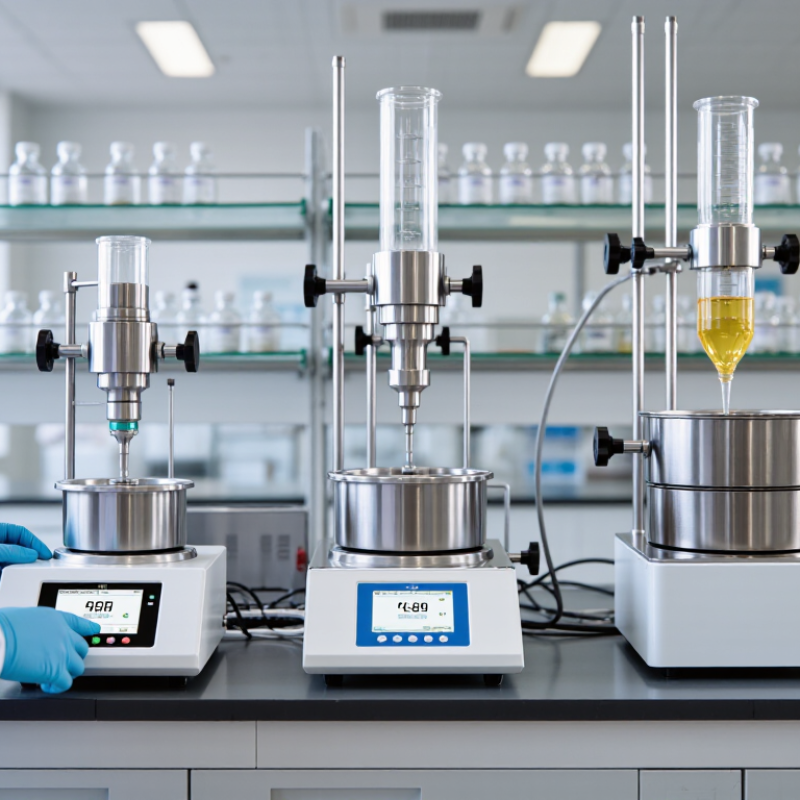
China Top 10 Dynamic Kinematic Viscosity Manufacturers

Understanding Dynamic Kinematic Viscosity and Its Measurement

Dynamic viscosity measures a fluid’s resistance to shear; kinematic viscosity relates that resistance to density. The relationship is ν = μ/ρ, where ν is kinematic viscosity, μ is dynamic viscosity, and ρ is density.

Units matter: kinematic viscosity is commonly reported in mm²/s, also called centistokes. One centistoke equals 1 mm²/s.

A rotational viscometer measures torque as a spindle moves through a sample. Capillary testing instead measures how long a liquid takes to flow through a calibrated tube under gravity.

ASTM D445 and ISO 3104 describe capillary methods and reporting practices for petroleum liquids.

Consider a sample with a kinematic viscosity of 100 mm²/s and density of 850 kg/m³: its dynamic viscosity is 0.085 Pa·s. That conversion only holds when density and viscosity refer to the same temperature.

Details matter.

Even a small temperature shift can change a reading, so record the test temperature, allow samples to equilibrate, and check calibration. Bubbles or contamination can also distort results. In practice, I would repeat an unexpected measurement rather than trust one tidy number; laboratory routines are not always perfect.

Where Kinematic Viscosity Instruments Are Used in China

In China, kinematic viscosity instruments are used wherever liquids must flow predictably at a specified temperature. Refinery laboratories check fuels and base oils; lubricant plants test batches before release. Technicians may place a capillary viscometer in a temperature-controlled bath, then time liquid flowing between marked points. Small temperature shifts can change the result. Details matter.

The National Bureau of Statistics reported that China processed 734.78 million tonnes of crude oil in 2023, a useful indicator of the scale of petroleum processing. The China Association of Automobile Manufacturers reported 30.161 million vehicles produced that year.

These figures do not measure viscometer demand, but they show why reliable fluid testing matters across fuel, lubricant, and automotive supply chains.

Labs also use instruments in incoming-material checks, product development, and investigations of inconsistent batches. Methods such as ASTM D445 provide a recognized basis for testing. Still, a precise reading cannot fix poor sampling or temperature control. That limitation deserves attention.

How to Evaluate Chinese Kinematic Viscosity Manufacturers

When comparing Chinese kinematic viscosity manufacturers, assess measurement capability, not catalog size. Ask which viscosity ranges their instruments cover and how temperature is controlled. Even a small temperature shift can affect readings, especially with low-viscosity oils. Request calibration records, test-method details, and sample reports with units clearly stated. Check whether production batches are traceable and whether service staff can explain measurement uncertainty. A polished brochure is not proof.

Ask for a sample evaluation using your fluid at the target temperature. Compare repeatability across several runs, then review cleaning steps and turnaround time. During a factory visit, observe calibration equipment, operator training, and final inspection records. Confirm what the quotation includes: installation, training, spare parts, and service response times. Vague answers deserve follow-up. Price matters, but low upfront cost may come with limited support or unclear specifications.

Tips: Send identical test conditions to each supplier. Keep written answers, check calibration certificate dates and scope, and ask who handles recalibration. One detail is easy to miss: verify that report units fit your laboratory workflow.

China Top 10 Dynamic Kinematic Viscosity Manufacturers — How to Evaluate Chinese Kinematic Viscosity Manufacturers

A practical evaluation starts with whether a supplier can measure kinematic viscosity at the temperatures relevant to your application. 40°C and 100°C are common reference temperatures for viscosity testing.

The chart shows common test temperatures, not manufacturer rankings. When comparing suppliers, check their capability to test at your required temperatures using recognized methods such as ASTM D445 or ISO 3104, and ask for calibration records and measurement uncertainty.

Profiles of 10 Leading Kinematic Viscosity Manufacturers in China

China’s viscosity-instrument sector serves oil laboratories, chemical plants, and quality-control teams. Kinematic viscosity describes how readily a fluid flows under gravity; dynamic viscosity measures its resistance to shear. Density links the two, so reliable testing often requires more than one measurement. These ten profiles describe common supplier capabilities, not a verified ranking of named companies.

One profile specializes in glass-capillary viscometers for routine laboratory tests.
Another builds temperature-controlled baths for stable sample readings.
A third develops automated timing and data-recording systems.
Some manufacturers focus on sample preparation and tube cleaning.
Others produce density instruments to support viscosity calculations.
A further group supplies rotational instruments for dynamic-viscosity testing.
Calibration-focused suppliers provide documented checks and service.
Portable-device makers support quick quality-control checks.
System integrators combine instruments, software, and installation.
OEM-focused producers build equipment for other sellers.

Small details matter. Buyers should check temperature stability, measurement range, repeatability, and calibration records against their test method. Ask for evidence. Request sample reports and confirm that staff can explain uncertainty and maintenance needs. Supplier descriptions can sound alike, and specifications alone may not reveal how an instrument performs in daily use. A practical review includes the lab’s sample types, operator training, cleaning routine, and after-sales support.

Comparing Manufacturer Capabilities, Certifications, and Support

When comparing China’s dynamic and kinematic viscosity manufacturers, look beyond product catalogs. Ask how each supplier controls temperature, calibrates instruments, and documents measurement uncertainty. ASTM D445 defines a capillary method for measuring kinematic viscosity; ASTM D7042 measures dynamic viscosity and density together. These methods are not interchangeable, so confirm that the quoted instrument matches your test procedure. A clear calibration record matters.

Certifications and support also reveal how a supplier handles routine work. ISO’s 2022 Survey reported more than 1.26 million valid ISO 9001 certificates worldwide, but certification alone cannot prove a specific instrument’s performance. Request the certificate scope, sample test records, and a practical demonstration using your operating temperature and fluid. Check whether technicians can explain repeatability, service intervals, spare-part lead times, and remote troubleshooting. A polished brochure is not enough.

Tips: Compare two or three suppliers using the same sample and test conditions. Record response time, report clarity, and how they handle an unexpected result. Small differences matter. One caution: support promises can sound stronger than actual service capacity, so ask for a named contact and typical repair turnaround before purchasing.

China Top 10 Dynamic Kinematic Viscosity Manufacturers - Comparing Manufacturer Capabilities, Certifications, and Support

This is an unranked supplier-evaluation worksheet, not a verified list of ten manufacturers. No company-specific capabilities, certifications, or support services are asserted. Verify each item directly with the supplier and request current documentary evidence.

Evaluation slot Product and application scope to confirm Measurement capability to verify Certification evidence to request Technical and after-sales support to assess Verification status
Candidate 01 Confirm whether it manufactures viscometers, reference fluids, or both; identify intended industries. Request stated viscosity range, temperature range, measurement method, and uncertainty data. Request current certificates, issuing-body details, validity dates, and applicable product or site scope. Check application advice, installation or calibration assistance, response times, and service coverage. Not independently verified
Candidate 02 Confirm product types, target sample classes, and whether custom configurations are available. Ask for repeatability, reproducibility, temperature control, and test-method documentation. Verify certificate authenticity and whether its scope covers the relevant manufacturing location. Assess training, troubleshooting, spare-parts availability, and warranty terms in writing. Not independently verified
Candidate 03 Establish whether offerings cover laboratory, process, or quality-control measurement needs. Request supported units, calibration interval recommendations, and traceability documentation. Check relevant quality-management and product-compliance documents; do not rely on logos alone. Confirm local-language documentation, remote support options, and escalation procedure. Not independently verified
Candidate 04 Confirm whether the supplier produces instruments, certified standards, accessories, or a combination. Request sample test reports showing method, temperature, results, and measurement uncertainty. Request certificate numbers and verify them with the issuing organization where possible. Review service-center locations, repair lead times, and access to replacement components. Not independently verified
Candidate 05 Identify supported sample types and any stated restrictions for opaque, volatile, or non-Newtonian materials. Confirm instrument configuration, applicable test standards, and operating limits for the intended use. Check current quality and safety documentation relevant to the offered product and market. Ask about method development assistance, operator training, and post-warranty service. Not independently verified
Candidate 06 Confirm production status, product lifecycle, and availability of configuration-specific documentation. Request calibration procedures, example certificates, and details of reference standards used. Verify the certificate holder, site address, validity period, and scope against the supplier's claims. Assess order support, onboarding, maintenance guidance, and stated service response targets. Not independently verified
Candidate 07 Determine whether products are designed for routine laboratory testing, production monitoring, or both. Check temperature uniformity, measurement range, and performance data at relevant test conditions. Request relevant management-system and product-compliance evidence with defined scope. Confirm help-desk access, software or firmware updates, and availability of technical documentation. Not independently verified
Candidate 08 Confirm whether the supplier offers viscosity reference materials and the concentrations or ranges available. For reference fluids, request certified values, stated test temperatures, uncertainty, and shelf-life information. Review material certificates and any applicable laboratory accreditation evidence; verify scope and validity. Ask about storage, handling, technical consultation, and replacement or returns policy. Not independently verified
Candidate 09 Check suitability for the required standards, sample throughput, and laboratory or process environment. Request a documented comparison between the offered method and the method required by the buyer. Obtain declarations and certificates directly from the supplier and confirm applicability to the exact model. Evaluate commissioning, preventive maintenance, repair logistics, and service documentation. Not independently verified
Candidate 10 Verify manufacturing responsibility, product origin, customization limits, and current product availability. Request specifications and validation data for the exact model and intended measurement conditions. Confirm certificates are current and cover the actual manufacturer, production site, and relevant product. Compare warranty coverage, training, spare-parts commitments, and support response arrangements. Not independently verified

Technical note: dynamic viscosity (μ) and kinematic viscosity (ν) are different quantities. They are related by ν = μ/ρ, where ρ is density at the same temperature. Common units include mPa·s for dynamic viscosity and mm²/s (cSt) for kinematic viscosity. Always compare values at the stated temperature and test method.

FAQS

What is kinematic viscosity?

It describes a fluid’s resistance to flow in relation to its density. It is commonly measured in mm²/s, also called centistokes.

How are dynamic and kinematic viscosity related?

Kinematic viscosity equals dynamic viscosity divided by density: ν = μ/ρ. Use values measured at the same temperature. Details matter.

How do laboratories measure kinematic viscosity?

A capillary test measures how long liquid takes to flow through a calibrated tube. A controlled bath keeps the sample near the test temperature.

What can distort a viscosity reading?

Temperature shifts, air bubbles, contamination, and poor calibration can affect results. Repeat an unexpected measurement. One reading may mislead.

Where are these instruments used in China?

Refinery and lubricant laboratories test fuels, oils, incoming materials, and inconsistent batches. Automotive supply chains also rely on predictable fluid performance.

Why is temperature control important?

Even a small shift can change a reading, especially for low-viscosity oils. Let samples equilibrate and record the test temperature.

How can buyers compare instrument suppliers?

Ask about measurement ranges, temperature control, calibration records, and service support. Request repeat tests using your fluid at the target temperature.

What should a sample evaluation include?

Compare several runs under identical conditions. Check cleaning steps, report units, turnaround time, and recalibration arrangements. I would still double-check the details.

Conclusion

This article introduces the principles behind Dynamic Kinematic Viscosity and explains how viscosity is measured in laboratory and industrial settings. It surveys common applications for viscosity instruments in China, including quality control, product development, and routine testing across different materials. Readers will also learn which practical factors matter when evaluating a manufacturer, such as instrument accuracy, measurement range, ease of operation, calibration services, and suitability for specific testing requirements.

The article profiles ten leading Chinese manufacturers without focusing on brand promotion, then compares their capabilities, certifications, technical support, and after-sales services. This overview is intended to help readers understand how suppliers may differ and what questions to ask before selecting an instrument or service provider. By considering both technical performance and ongoing support, buyers can make a more informed choice for their laboratory or production needs.


Mason

Mason

Mason is a seasoned marketing professional with a deep expertise in the company's offerings and a passion for driving brand awareness. With a strong background in digital marketing strategies, he has an innate ability to connect with diverse audiences and effectively communicate product benefits.......