Custom Rock Fracture Toughness Tester Manufacturers, Pricelist

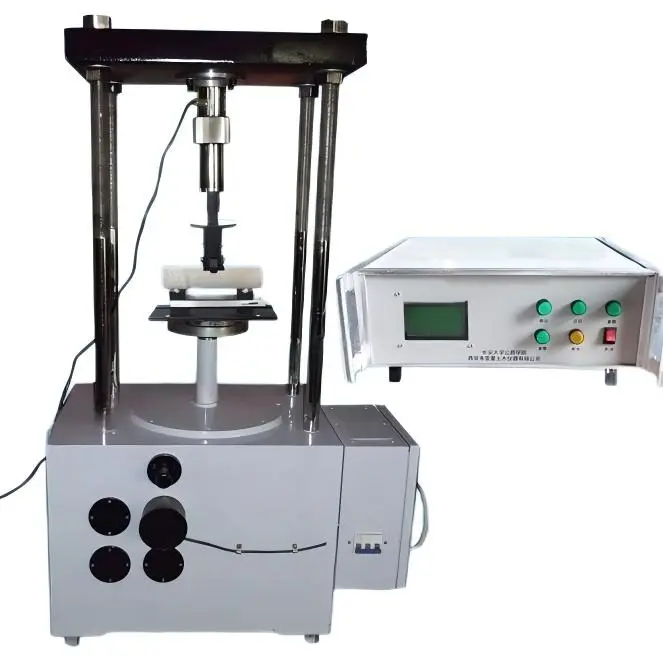
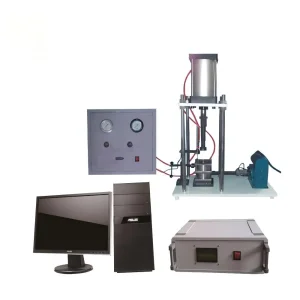
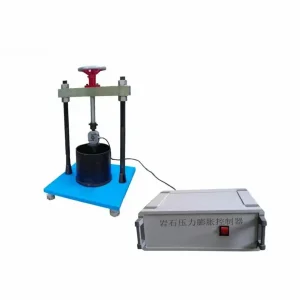
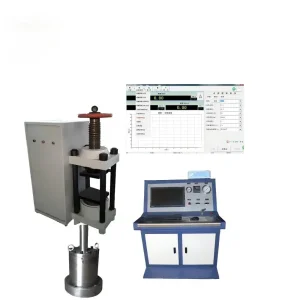
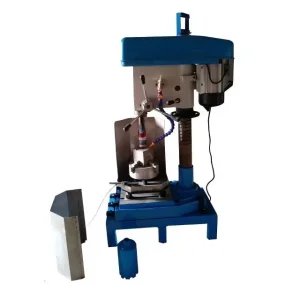
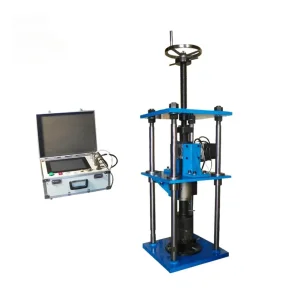
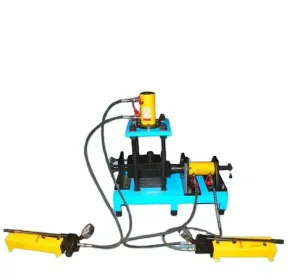
This instrument measures the fracture toughness (flexural strength) of rock materials. Fracture toughness mainly classifies and characterizes intact rocks from the perspective of crack propagation resistance, and can also be used as an indicator of rock fragmentation process (crushing tunnel excavation) and for the analysis of hydraulic fracturing and stability.

The rock fracture toughness tester is a specialized equipment used to determine the resistance of rock materials to crack propagation, mainly used to evaluate the fracture mechanical properties of rocks (such as type I, type II, or mixed fracture toughness)

Product Description

1

Main Applications

Fracture Parameter Determination Quantify the critical stress intensity factors (K_IC, K_IIC) and fracture energy of rocks.
Engineering Safety Assessment Predicting the crack propagation behavior of rock mass under load, such as hydraulic fracturing and slope instability.
Research and Teaching Study the mechanism of rock fracture and the influence of microstructure in academic environments.
2

Technical Features

  • Uses three-point bending method for determining fracture toughness of rocks with cylindrical straight-incision specimens.
  • Sample size: Diameter 48mm to 54mm; Length-to-diameter ratio of 3.5 to 4 times.
  • Support point distance to diameter ratio: 3.33.
  • Straight incision depth-to-diameter ratio: 0.35-0.50; Incision width ≤ 1.5mm.
  • Load Range: 0-200kN ± 5N.
  • Three-point bending test fixture: Upper support point center position; Bottom pivot spacing 200mm.
  • Loading Rate: 3N to 5KN/s; Speed Range: 0.001 to 10mm/min.
  • Displacement Rate: 6 × 10⁻⁴ mm/s with a travel range of 0-10mm ± 0.001mm.
  • Optional clamp-type extensometer: Gauge length 3.0 mm; Range +2.5 mm/-1.0 mm.
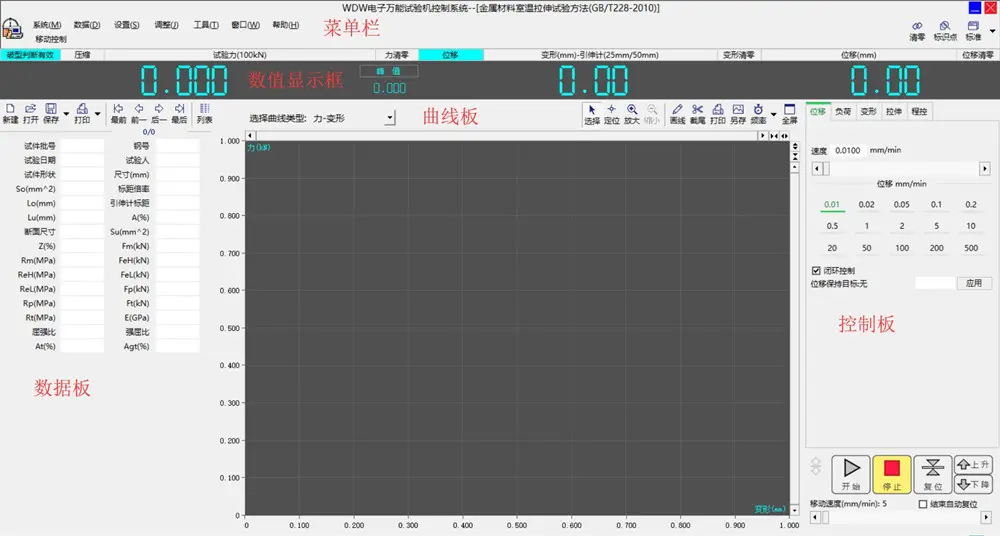
  • Real-time LCD display for vertical load and specialized industrial software for data collection (force, deformation, graphical curves).
3

Physical Specifications

Component / Parameter Description / Specification
Evaporating dish 4 1/2-inch (114.3 mm) diameter porcelain evaporating dish
Soil mixing knife Blade 3 inches (76.2 mm) long and 3/4 inches (19 cm) wide
Liquid Limit Meter Mechanical device consisting of a copper disk and stand
Groover A groover with a measuring gauge
Capacity Covered dish container to prevent moisture loss during weighing
Balance Sensitivity of 0.01 grams
Exterior dimensions 290 x 240 x 150mm
Weight 3.8kg
?

Frequently Asked Questions

What testing method does this equipment use?
The equipment utilizes the three-point bending method specifically designed for cylindrical rock specimens with straight incisions.
What are the required dimensions for rock samples?
The system supports cylindrical specimens with a diameter between 48mm and 54mm, with a length at least 3.5 to 4 times the diameter.
Can the software display data in real-time?
Yes, the industrial computer software provides real-time collection and graphical display of force, deformation cracks, and rock expansion curves.
What is the maximum load capacity?
The equipment supports a load range from 0 to 200kN with a precision of ± 5N.
Is an extensometer included for measuring cracks?
A clamp-type extensometer with a 3.0mm gauge length and a range of +2.5mm/-1.0mm is available as an optional accessory.
What is the displacement measurement range?
The travel range is 0-10mm with a high precision of ± 0.001mm.

Related Products