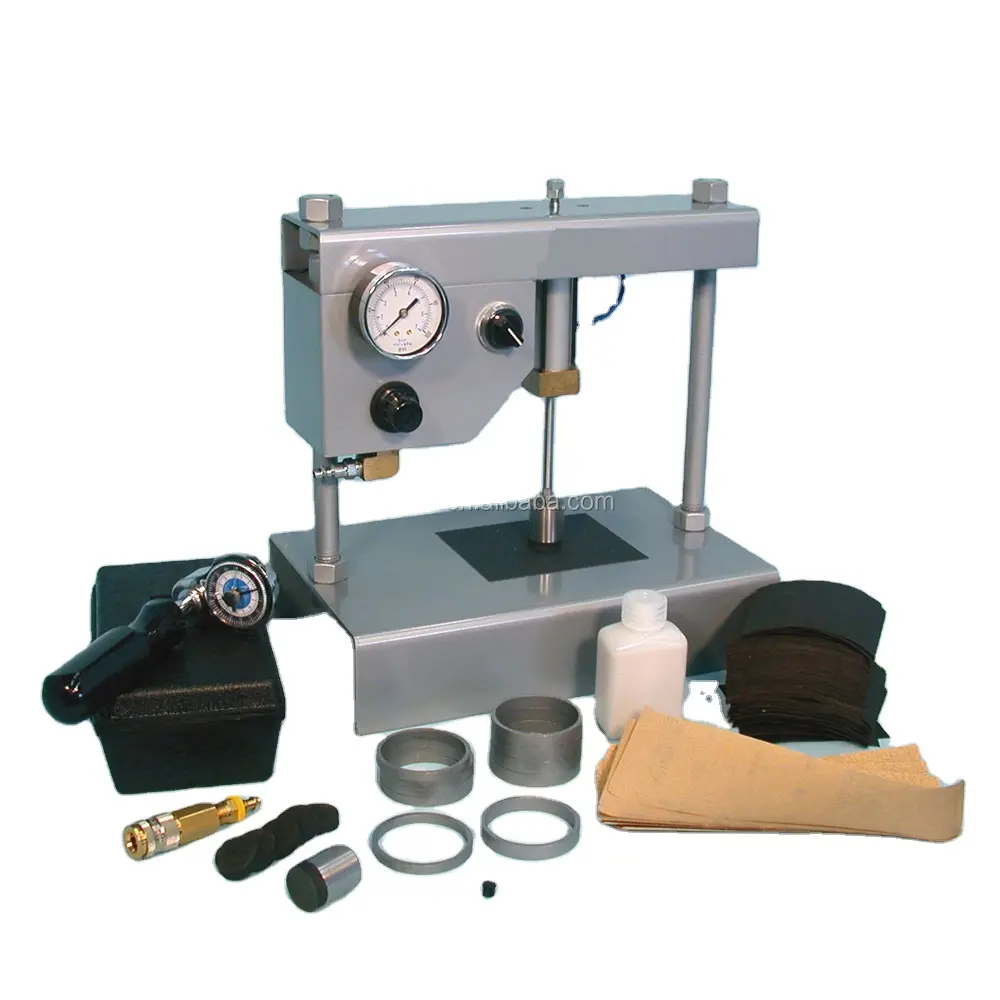
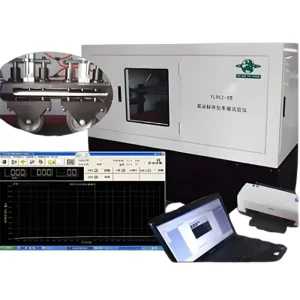
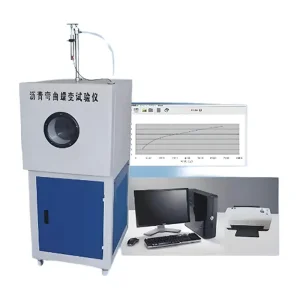
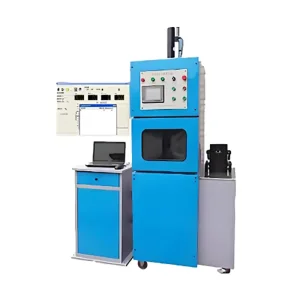
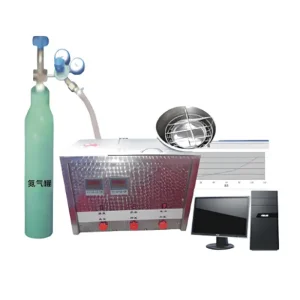
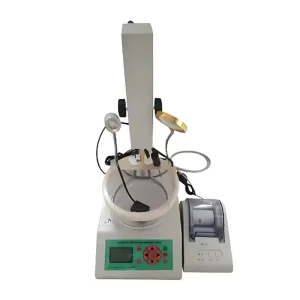
- Pressure Head: Diameter Φ 28 mm, Thickness 28.6 mm
- Rubber Gasket: Bottom diameter Φ 28.6 mm, Thickness 6.4 mm, Hardness 60 HRC
- Working Pressure: 128.5 N ± 1.0 N on style stage
- Falling Speed: Max 8 cm/s
- Torque Wrench: Range ≥ 3.5 N·m
- Pressure Gauge: 0 - 1 Mpa range
- Ring Moulds: Inside diameter 60 mm; Thickness options: 6 mm and 10 mm
- Pump System: Small pump 0 ~ 1 Mpa, adjustable pressure
1
Familiarize with tester features and the usage of each part for specimen preparation.
2
Shape the specimen in an environment at 25 ℃ ± 2 ℃ for 30 minutes, then place it on the adhesion tester test bench.
3
Gently press the piston rod head by hand to contact the specimen. Pull out the red release button and use the pump or air compressor to apply pressure to the tester.
4
Maintain the pneumatic indenter on the specimen at an air pressure gauge reading of 0.2 Mpa (providing 128.5N pressure).
5
Clear the torque wrench dynamometer table. Secure the cylinder rod end and smoothly rotate it to reverse 90° ~ 120° within 0.7s ~ 1.0s. Record the readings and observe the damage state.
6
Promote the release button to rise the pressure head and wipe the instrument clean after use.
7
Wait for 60 minutes and repeat the above steps for verification.
Note: When using the pressure regulating valve, pull up the knob. If the gauge pressure cannot be increased while pumping, turn it clockwise until the desired value is reached, then press the knob down to set.
- The pneumatic circuit uses fast-loading pipe fittings. If leaks are detected at joints, ensure the tube is inserted firmly into the nipple.
- Regularly clean and maintain the instrument to ensure it remains free of aggregate and asphalt.
- Strictly follow the operating rules to ensure the accuracy and smooth progress of the test.
- Torque wrenches and connecting pipe (1pc)
- Round tryout moulds (6mm & 10mm thickness, 3pcs each)
- Inflator group
- Instruction manual (1pc)
- Quality Certificate (1pc)
- Quality Feedback Form (1pc)
Frequently Asked Questions (FAQ)
Q1: What is the required environment for shaping the test specimen?
A: The specimen should be shaped in a temperature-controlled environment of 25 ℃ ± 2 ℃ for a duration of 30 minutes before testing.
Q2: What is the correct pressure setting for the pneumatic indenter?
A: The air pressure gauge should be maintained at 0.2Mpa, which ensures the indenter applies exactly 128.5N of pressure to the specimen.
Q3: How fast should the torque wrench be turned during the test?
A: The torque wrench should be rotated smoothly through an angle of 90° to 120° within a timeframe of 0.7 to 1.0 seconds.
Q4: What sizes of ring moulds are provided with the instrument?
A: The package includes ring moulds with an internal diameter of 60mm and two different thicknesses: 6mm and 10mm (3 pieces of each).
Q5: What should I do if I find the air joints are leaking?
A: Since the system uses fast-loading pipe fittings, simply ensure the tube is inserted more firmly and deeply into the nipple to create a proper seal.
Q6: How long should I wait between repeated tests?
A: It is recommended to follow a 60-minute interval before repeating the test procedure on the specimen.
 Zealchon Electronic