Custom Laboratory Double Barrels Theoretical Maximum Specific Gravity Density Tester for Asphalt Mixture Manufacturers, Pricelist

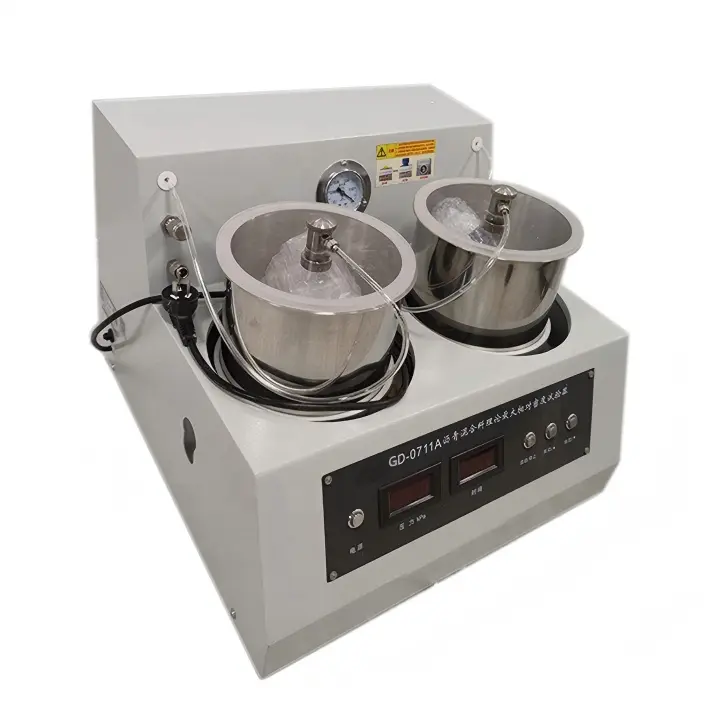
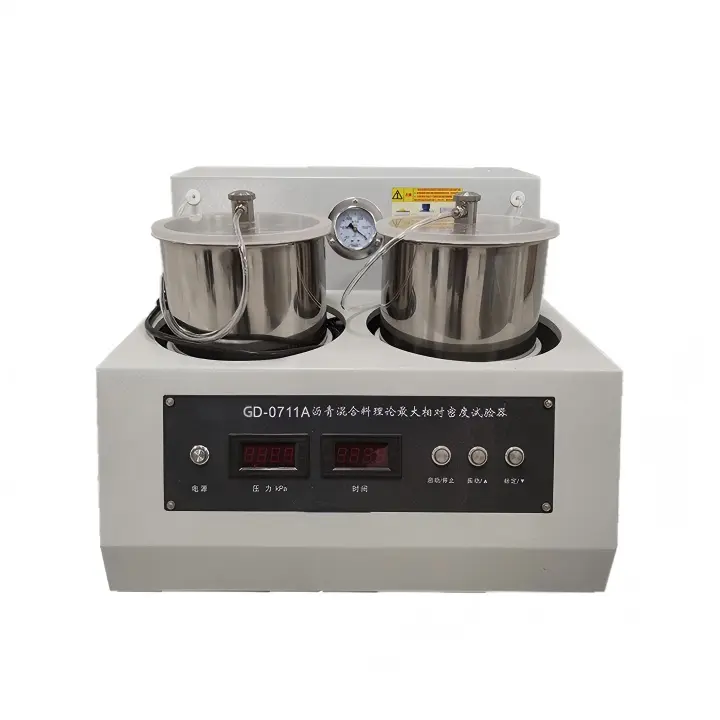
Asphalt mixture theoretical density tester is an instrument used to determine the theoretical maximum relative density of asphalt mixture. The following will introduce its working principle, structural composition, usage and other dimensions:

Working principle: It mainly adopts the vacuum method. By placing the asphalt mixture sample in a negative pressure container, vacuuming the mixture to discharge the air in the mixture, and then using the buoyancy of water or weighing method to measure the volume and mass of the mixture in a vacuum state, and then calculate the theoretical maximum relative density.

Product Description

01
Product Overview

This instrument complies with the industry standard of the Ministry of Transport "Highway Asphalt and Asphalt Mixture Test Procedure, Asphalt Mixture Theoretical. Large Relative Density Test (Vacuum Method)". The vacuum method is used to determine the theoretical maximum relative density of asphalt mixture at 25°C.

The determination of the theoretical maximum relative density of asphalt mixture provides critical data for calculating void ratio and compaction degree in mix design, road condition investigation, and pavement construction quality management.

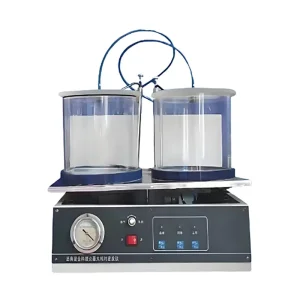
The maximum relative density refers to the ratio of the mass of the test piece per unit volume to the mass of water at the same temperature when the asphalt mixture is compacted to an ideal state without voids. This instrument consists of a frame, vacuum pump, vibrator, regulating valve, vacuum gauge, pressure gauge, and water accumulation device, allowing for parallel tests on two samples simultaneously.
02
Structural Composition
Air Extraction System
Composed of a high-efficiency vacuum pump used to extract air from the negative pressure container to achieve the specified vacuum degree.
Vibration System
Includes a vibration motor and table that vibrates the mixture during vacuuming to facilitate bubble discharge.
Negative Pressure Container
Available in types A, B, or C with volumes of 4000ml to 4300ml, typically made of stainless steel or plexiglass.
Control System
Features single-chip microcomputer control with a display screen for automatic vacuuming and vibration processes.
Measurement System
Equipped with precision vacuum gauges and pressure sensors to monitor container pressure changes in real-time.
Maintenance
Easy maintenance by checking pump oil levels and keeping the vibration table clean to ensure long-term reliability.
03
Technical Specifications
Oscillation Mode
Continuous / Interval
Amplitude
0.2mm
Vacuum Range
-0.1MPa ~ 1 atm (Adjustable)
Negative Pressure
3.7kPa ± 0.3 kPa (Digital)
Pumping Power
120W
Vacuum Barrels
2 x 4300ml Plexiglass
Barrel Dimensions
Dia 190mm × Depth 170mm
Power Supply
220V ± 10%
Dimensions
500 × 500 × 500mm
?
Frequently Asked Questions
What is the primary application of this instrument?
It is used to determine the theoretical maximum relative density of asphalt mixtures at 25°C using the vacuum method, which is essential for calculating void ratios and compaction degrees.
Does this device allow for testing multiple samples?
Yes, the design includes two 4300ml vacuum barrels, allowing the operator to perform parallel tests on two samples at the same time for higher efficiency.
How is the vacuum level monitored?
The instrument features a digital control system that provides a real-time display of the vacuum degree, specifically maintaining a negative pressure of 3.7kPa ± 0.3 kPa.
What materials are the vacuum containers made of?
The containers are typically made of high-quality plexiglass or stainless steel, ensuring durability and clear visibility during the testing process.
What maintenance is required for the vacuum pump?
It is important to regularly check the lubricating oil levels in the vacuum pump and add or change the oil as needed to ensure consistent performance.
Is the vibration mode adjustable?
Yes, the vibration system supports both continuous and interval oscillation modes, and the time parameters can be set via the control panel.

Related Products