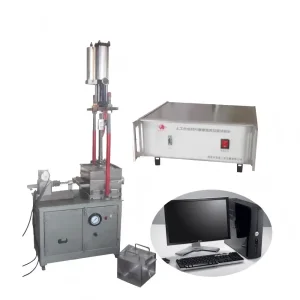
Custom Airport runway surface pavement Profilometer Longitudinal force friction coefficient testing equipment Pricelist, Quotes

Pavement is an important part of the highway. Its performance is directly related to the level of comfort, safety, convenience and other services provided by the road to users, as well as the service life of the road itself. As an important airport facility, the airport pavement plays an extremely important role for aircraft. The detection of pavement friction coefficient is of great significance to both airports and aircraft.

This testing equipment is suitable for measuring the longitudinal force coefficient of asphalt pavement or cement concrete pavement. The measurement results can be used as the basis for completion acceptance or service life evaluation of the anti-skid ability of the pavement.

Product Description

Structure and Principle
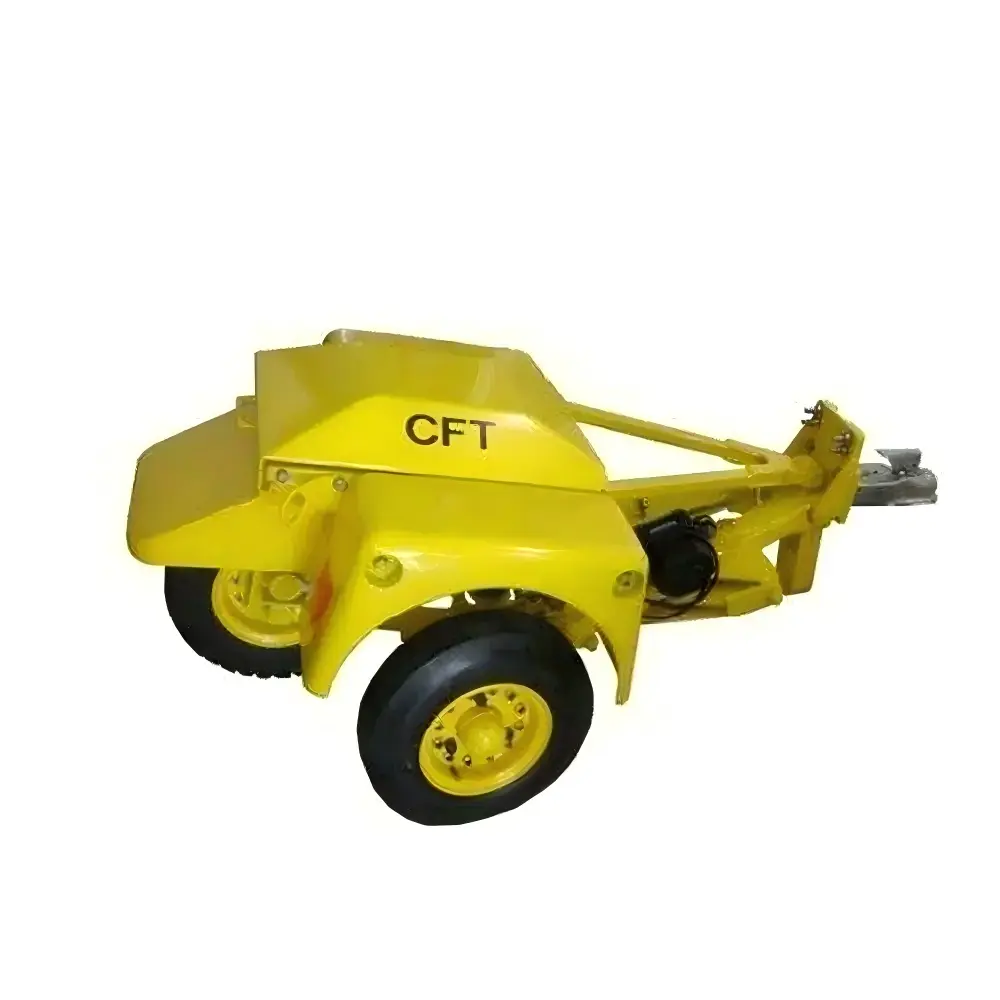
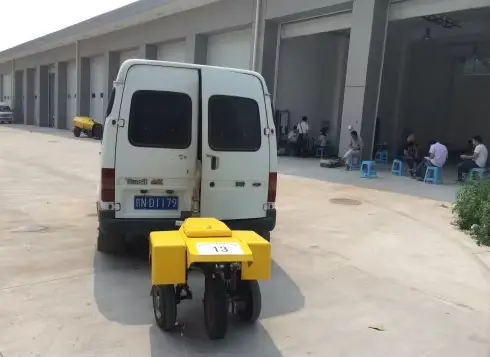
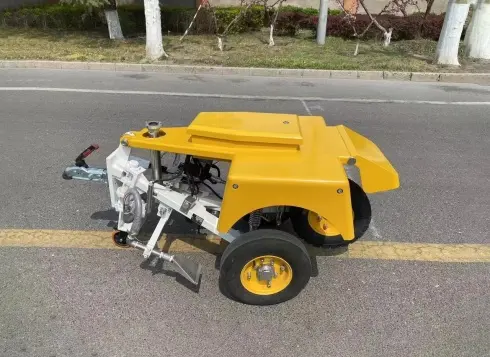
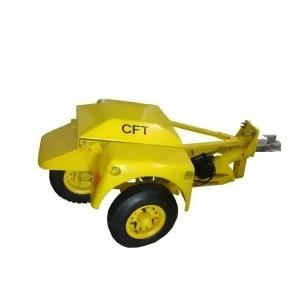
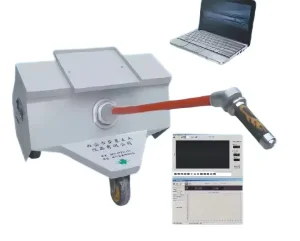
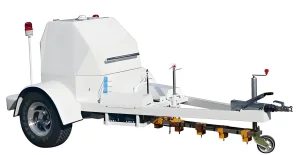
The longitudinal friction coefficient is a measuring device for measuring the friction coefficient of the longitudinal force on the road surface. It consists of a tractor, a trailer chassis, a trailer frame, a special water tank, a laptop computer operated by test software, a sprinkler and water volume control system, an electrical control system, and a friction sensor with a sensor. It consists of resistance test wheel system, 12-15% slip rate guarantee system, alarm and safety warning system.
The basic working principle is: it moves forward under the traction of the tractor, and there is a 0.5-1mm water film between the friction wheel and the ground. Due to the speed difference between the friction wheel and the running wheel, the test wheel produces a slip rate of 12-17%, which will generate a longitudinal force perpendicular to the driving direction. This longitudinal force serves as a characteristic value representing the friction coefficient of the road surface, and is determined by high-precision. The force sensor measures and transmits it to the computer for processing; the road mileage is measured by a high-resolution encoder, and the microcomputer gives the corresponding table and curve of the road position and friction coefficient. After data processing by the software, the measurement results of the longitudinal force friction coefficient correspond to the road station number, and the longitudinal force coefficient for each section (5 meters, 10 meters, 20 meters, 100 meters, and 1 kilometers can be selected) is given. The vehicle speed is obtained from the encoder, and the sprinkler device automatically adjusts the water output according to the vehicle speed so that the thickness of the water film between the test wheel and the road surface is 0.5~1mm.
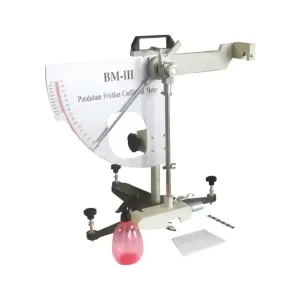
longitudinal friction coefficient device 1
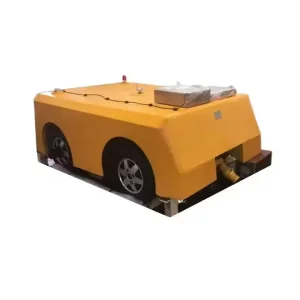
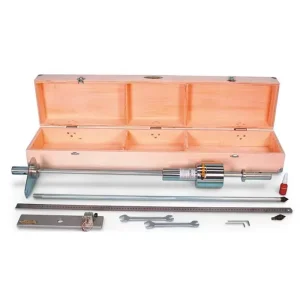
longitudinal friction coefficient device 2
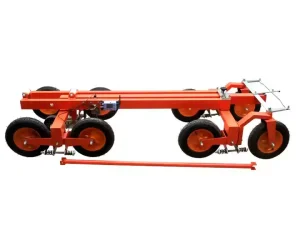
longitudinal friction coefficient device 3
Technical Parameters
No. Projects and Units Unit Requirements
1Volume (length, width, height)mmStandard
2Operating temperature-35 ~ +60
3Maximum driving speed (full load)km/h130
4Ground clearancemm100
5Overall equipment qualitykg500KG
6Full load total masskg560KG
7Test relative error%≤2
8Test repeatability error-≤±0.02
9Microtexture test speedkm/h96
10Macro texture test speedkm/h65
11Minimum test speedkm/h20
12Load cell accuracy%≤0.02
13Water tank and capacityLStainless steel, 600L
14Continuous test distancekm≥7
15Test wheel lift pump setMpa5
16Test wheel air pressureMpa0.207
17Test slip rate%12~17
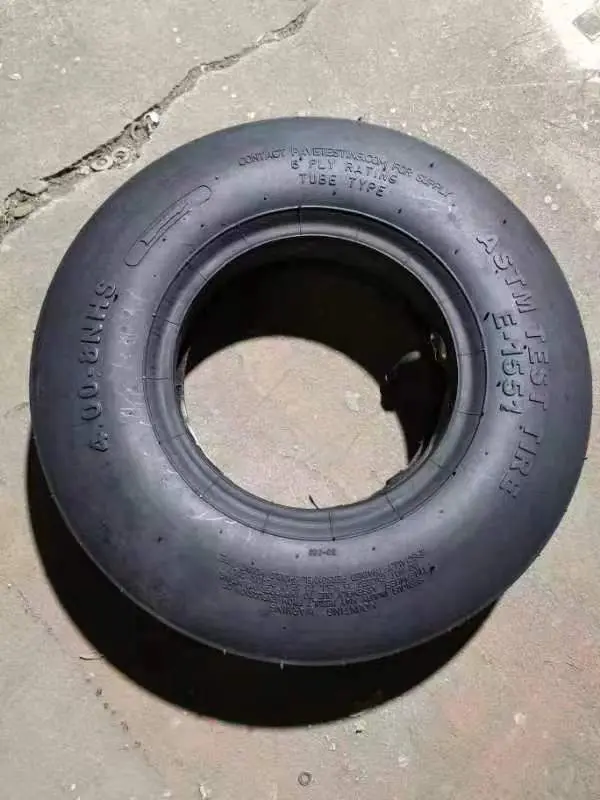
18Test tires-4.00-8”
19Insulated from ground≥1.5MΩ
20Electronic calibration deviceExternal electronic calibration device
21Operating systems and softwareEnglish Windows operating system, drop-down style software
22Safety braking systemAutonomous and decoupling emergency braking devices equipped
FAQ (Frequently Asked Questions)
Does the equipment comply with the technical standards of CAAC and ICAO?
Yes, completely. Our friction coefficient testing equipment strictly follows ICAO Annex 14, FAA AC 150/5320-12C, and MH/T 5024 regulations. Third-party authoritative measurement and testing reports are provided upon delivery.
What is the testing principle of the Longitudinal Force Friction Coefficient Test Vehicle (LFT)?
LFT adopts the principle of fixed slip ratio (usually 13%-15%) and uses a dedicated test tire to roll on the track and apply braking force. The sensor directly measures the longitudinal frictional resistance generated, providing a realistic simulation of tire stress during takeoff and landing.
How stable is the data during high-speed (95 km/h) testing?
The device features a high-precision dynamic compensation system. Even at 95 km/h, the self-lubricating water spray system ensures uniform water film thickness (1mm), with a data sampling frequency up to kHz, controlling errors within 0.03 pm.
What is the capacity of the built-in water tank and its continuous testing distance?
The capacity is usually 600-1000L. At a speed of 65 km/h with a 1mm water film, a single full tank can continuously test for approximately 5000-8000 meters, meeting the requirements of a single track without intermediate replenishment.
Can the test data be viewed in real-time and exported?
Yes. The onboard system displays real-time friction curves, IRI flatness, speed, and GPS position. Standard inspection reports can be generated in PDF, Excel, or Word format with one click, complying with quality inspection requirements.
What are the requirements for the standard tires and maintenance?
Tires comply with ASTM E1551 standards. For maintenance, it is recommended to calibrate once a year. The software includes a built-in static calibration program for daily self-inspections through a standard calibration rack.

Related Products