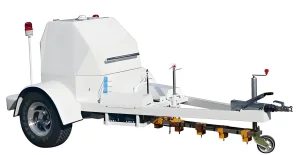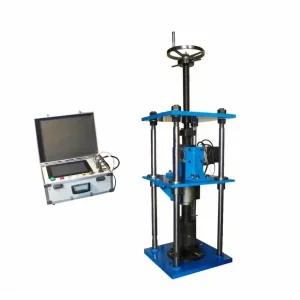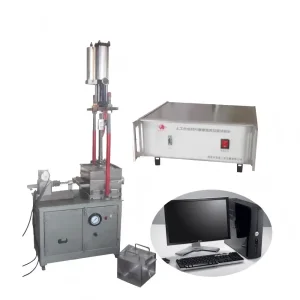
Custom Laser Pavement Structure Depth Tester (push Type) TD Texture Depth Manufacturers, Pricelist

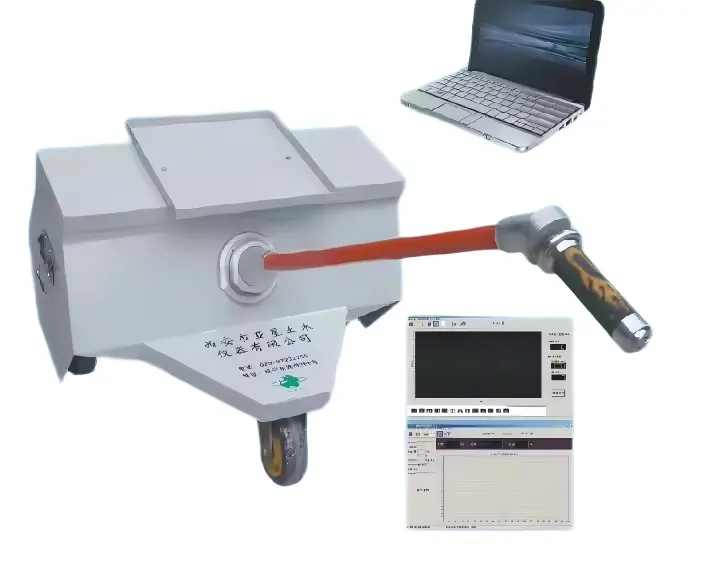
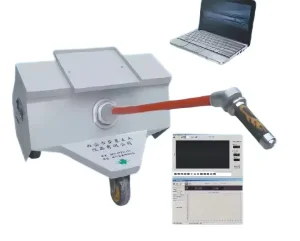
This instrument is suitable for testing and continuously collecting the depth of road surface structures under normal driving conditions such as new and renovated airports and ports, road surface engineering quality acceptance, and no serious damage, disease, and no accumulated water, snow, mud, etc. However, it is not suitable for measuring the depth of cement concrete road surfaces with groove structures

Texture Depth (TD) is an important indicator for evaluating the anti-skid performance, drainage capacity, and driving comfort of road surfaces. The laser construction depth tester is a non-contact device based on the principle of laser ranging, used to quickly and accurately measure the macroscopic texture and microscopic construction depth of road surfaces. Compared to traditional methods such as sanding, it has advantages such as high efficiency, automation, and data traceability.

Product Description

Working Principle
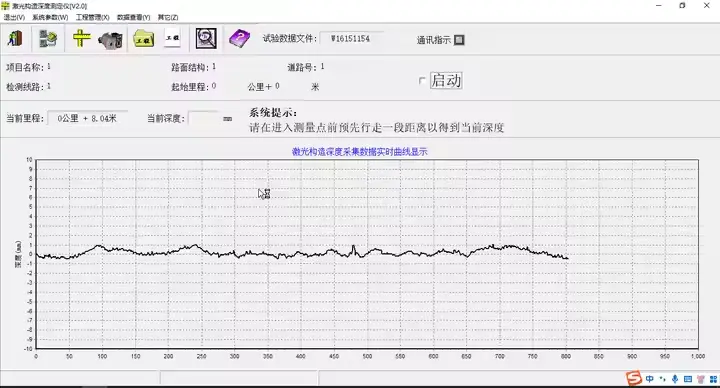
Laser scanning The laser beam scans the road surface at a fixed frequency (such as 1-50kHz) and records surface elevation data.
Texture analysis Calculate the construction depth (MPD, MTD, etc.) through algorithms such as root mean square method and cross-sectional area method.
Dynamic compensation (vehicle mounted) If installed on a vehicle, it is necessary to combine IMU (Inertial Measurement Unit) to eliminate vibration effects.
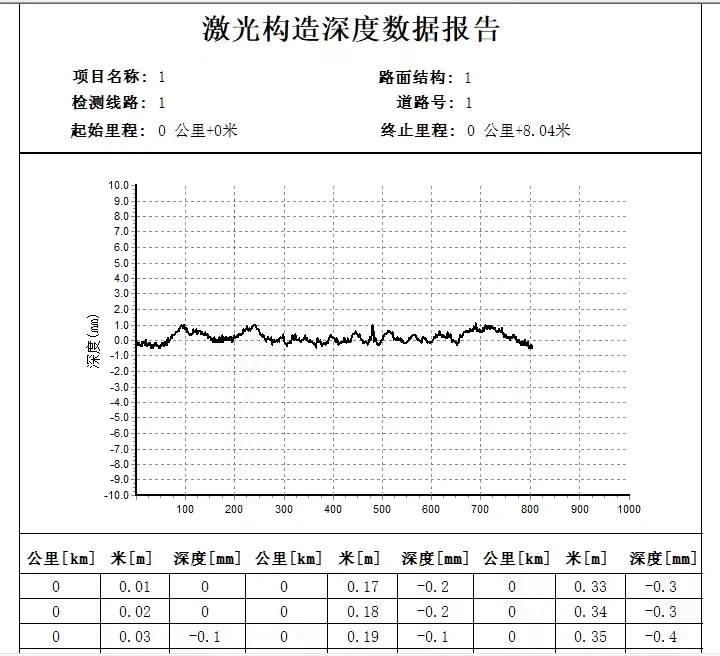
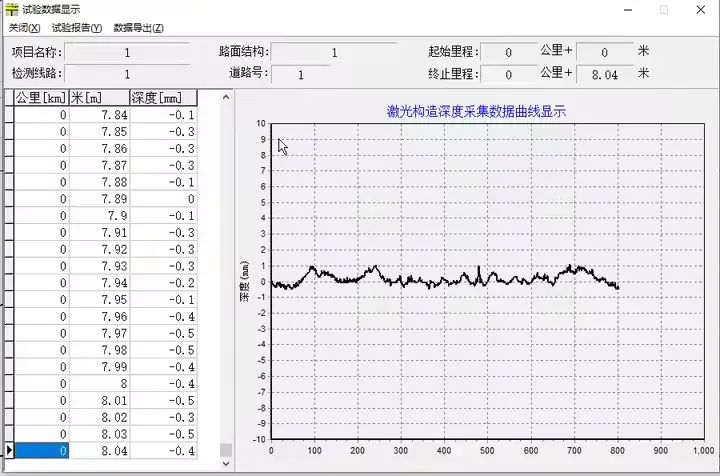
Data output Generate a depth distribution map and support correlation analysis with friction coefficients (such as swing BPN).
Laser scanning working principle
Core Advantages

Non contact measurement: avoids the human error of traditional sanding methods and is suitable for different types of road surfaces (asphalt, cement, grooved road surfaces, etc.).

Efficient and fast: The vehicle mounted detection speed can reach over 60km/h, suitable for large-scale road network detection.

High precision: The resolution of the laser sensor can reach the micrometer level, meeting international standards such as ASTM E1845 and ISO 13473.
Typical Application Scenarios

Highway maintenance: Monitor the degradation of anti-skid performance of asphalt pavement and optimize maintenance decisions.

Airport runway: Check the texture depth of the runway surface to ensure the safety of aircraft takeoff and landing.

Construction quality control: Verify whether the construction depth of the newly paved road meets the specifications (such as the requirement for MTD ≥ 0.7mm on highways).

Research experiment: Study the relationship between texture characteristics and friction coefficient of different mixtures (SMA, OGFC, etc.).

Technical Parameters
Laser sensor ±20mm ±0.01mm
Working distance 50mm-120mm
Minimum sampling interval 10 mm
Sensor precision 0.1 mm
Operators (inc. driver) 1-2 people
Operating temperature 0 ℃ to 50 ℃
System power supply DC 12 V
Clear distance to pavement 100 mm (testing)
Detection range: TRI 0-100 m (customizable)
Test repeatability Deviation factor: CV < 3%
Frequently Asked Questions
Q1: What is the primary benefit of non-contact laser measurement?
It eliminates human error inherent in traditional sand-patch methods and allows for high-speed, automated data collection without damaging the road surface.
Q2: Can the system be used for high-speed road network inspection?
Yes, the vehicle-mounted system can operate at speeds exceeding 60km/h, making it ideal for large-scale highway monitoring.
Q3: Which international standards does this equipment comply with?
The system meets high-precision requirements established by international standards such as ASTM E1845 and ISO 13473.
Q4: How does the system handle vehicle vibration during mobile testing?
The system utilizes an Inertial Measurement Unit (IMU) for dynamic compensation, effectively eliminating the impact of vehicle vibration on elevation data.
Q5: What types of road surfaces can be measured?
It is suitable for a wide variety of surfaces, including asphalt, cement, and grooved road surfaces.
Q6: What is the required power source for the system?
The system operates on a standard DC 12V power supply, making it easy to integrate with vehicle electronics.

Related Products