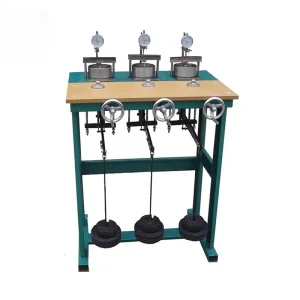
Custom 5.5 MPa Laboratory 74mm Probe In-situ Menard Field Pressuremeter Of Soil Supplier, Quotes

The pressuremeter test is an in-situ testing method used to achieve a quick measure of the in-situ stress-strain relationship of the soil. In principle, the pressuremeter test is performed by applying pressure to the sidewalls of a borehole and observing the corresponding deformation.

For the test readings (volume variation based on controlled pressure), a stress-strain curve can be obtained, in the case of plane deformation, which yields:
-the Menard pressuremeter modulus
-the creep pressure
-the Menard limit pressure.

Product Description

Product Description

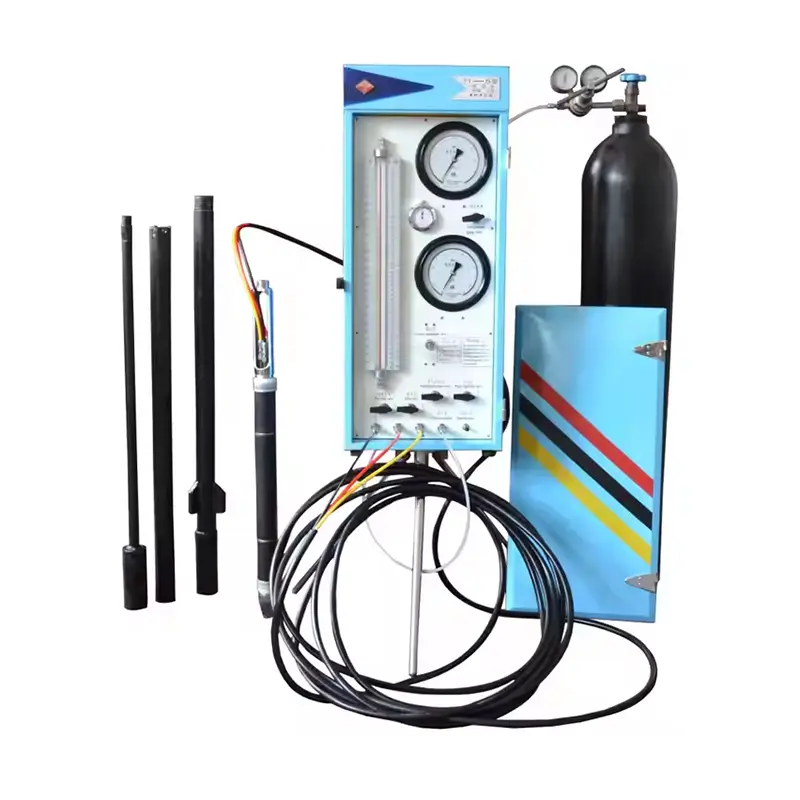
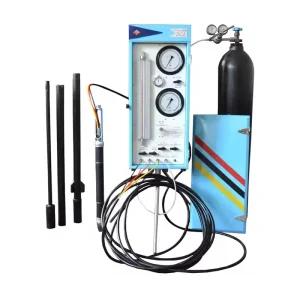
A pressure meter is an on-site testing device used to measure the mechanical properties of soil or rock. The Menard Field Pressuremeter measures the deformation response of soil or rock mass by applying radial pressure to the borehole wall, in order to evaluate its stress-strain relationship, strength parameters, and deformation characteristics.
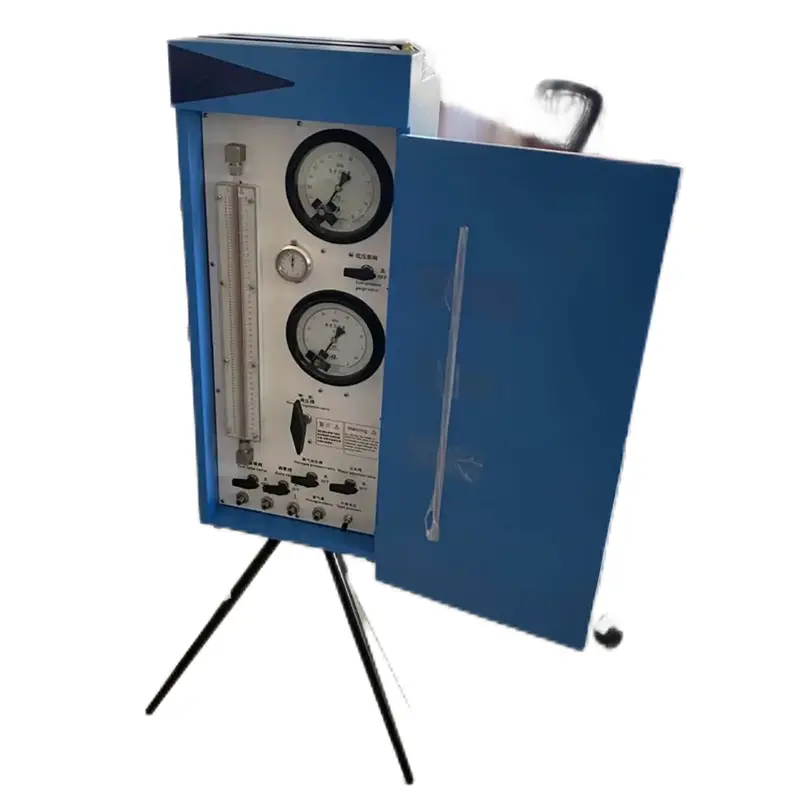
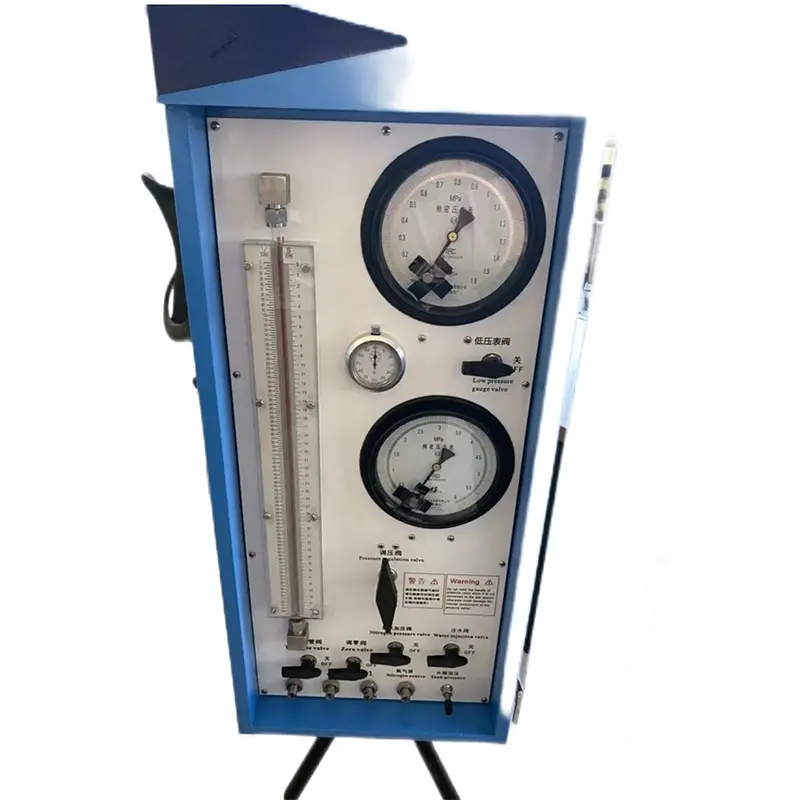
Main Components

  • Probe: Contains an expandable rubber or metal film used to apply pressure to the borehole wall.
  • Pressure control system: Control the pressure inside the probe, usually achieved through hydraulic or pneumatic means.
  • Data collection system: Record pressure and deformation data for subsequent analysis.
  • Cable and connection device: Connect the probe to the ground equipment to transmit pressure and data.
Pressuremeter main components

Working Principle

  • Step 1: Insert a probe into the borehole to ensure it is in contact with the borehole wall.
  • Step 2: Gradually increase the pressure inside the probe to expand it and apply radial pressure to the hole wall.
  • Step 3: Record the relationship between pressure and hole wall deformation, and generate a pressure deformation curve.
  • Step 4: Analyze the mechanical properties of soil or rock mass based on curves, such as elastic modulus, shear modulus, shear strength, etc.
Pressuremeter working principle

Application

  • Geotechnical engineering: evaluation of foundation bearing capacity, slope stability, tunnel support design, etc.
  • Geological exploration: the study of the mechanical properties of rock or soil masses.
  • Construction monitoring: Real time monitoring of the impact of construction on the surrounding soil.

Advantages

  • Provide in-situ testing data to reduce sampling and laboratory testing errors.
  • Suitable for various types of soil and rock masses.
  • The data can be directly used for engineering design.

Technical Parameters

Item Parameter Model
PY-3 PY-4 PY-5
1 Pressuremeter Dia. with metal shield Ø 74mm
Measure chamber length 250mm
Pressuremeter length 800mm
2 Measuring precision Min. reading of pressure gauge 0.005Mpa
Volume meter effective range 400mm
Comprehensive error ≤ ±1%
Measurements Electrical measurement and visual
3 Others Max. Pressure 2.5Mpa 4.0Mpa 5.5Mpa
Size 830 × 360 × 220mm
Weight 28kg
Range Clay, silt and other formations Hard clay, silt, sand and other formations Clay, silt, sand, weathered rock, soft rock strata

Frequently Asked Questions

What is a Menard Field Pressuremeter?

It is an in-situ testing instrument designed to evaluate the mechanical properties and stress-strain characteristics of soil or rock mass. By expanding a probe inside a borehole, it applies radial pressure to analyze deformation response.

How does the pressuremeter test improve engineering design?

The pressuremeter provides direct in-situ parameters (such as pressuremeter modulus and limit pressure) that reduce sampling errors compared to traditional lab tests. This data is directly applicable to foundation bearing capacity and settlement design.

What are the main components of this pressuremeter system?

The system consists of an expandable probe, a high-precision pressure control system, a dedicated data collection system, and connecting cables/devices to transmit data and pressure readings between the probe and surface equipment.

Which model is suitable for hard clay, sand, or soft rock?

The PY-4 model (up to 4.0 Mpa) is suitable for hard clay, silt, and sand formations. The PY-5 model (up to 5.5 Mpa) is ideal for tougher strata, including weathered rock and soft rock formations, while PY-3 is best for clay and silt.

What measurements and precision levels does this testing unit achieve?

The system features a minimal pressure gauge reading of 0.005Mpa with a comprehensive error rate of ≤ ±1%, using both electrical measurement and visual systems to ensure highly reliable and precise data recording.
Related Products