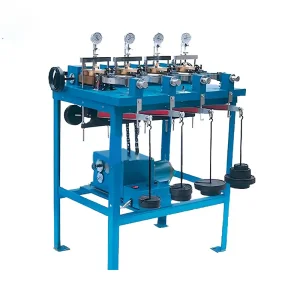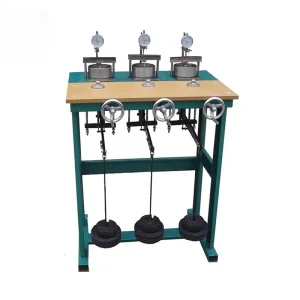
Custom Soil Dynamic Direct Shear Test Apparatus Manufacturers, Quotes

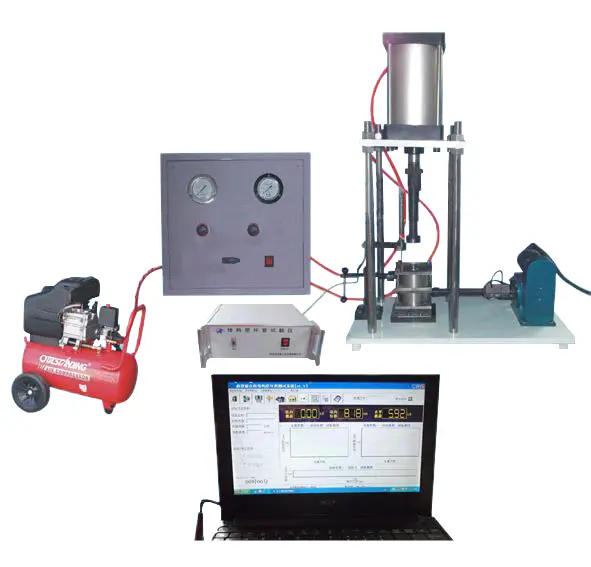
Soil dynamic direct shear apparatus is an experimental device used to study the shear strength, deformation characteristics, and interfacial friction behavior of soil under dynamic (cyclic or transient) shear loads. It combines the cutting principle and dynamic loading capability of traditional direct shear instruments, and is suitable for simulating the mechanical response of soil under dynamic conditions such as earthquakes, traffic loads, and wave action.

Used to determine the dynamic shear strength, deformation, and shear modulus of soil, a specimen is usually subjected to shear forces under different vertical pressures to obtain the shear stress at failure.

Determine the shear strength coefficient, internal friction angle, and cohesion based on Coulomb's law. According to the required setting of dynamic shear stress frequency and waveform, calculate the shear modulus of dynamic shear deformation for analysis and evaluation.

Product Description

Experimental Principle

The automatic Direct Shear Test Apparatus is designed for saturated fine-grained soil or sandy soil, with adaptability for other coarse-grained soils. This experiment determines the failure strength (including liquefaction) of saturated soil under dynamic stress and provides essential dynamic characteristic indicators.

Test Conditions:
  • Dynamic Shear Strength: Uses consolidation undrained vibration test conditions.
  • Deformation Characteristics: Uses consolidation undrained vibration test conditions.
  • Residual Deformation: Uses consolidation drainage vibration test conditions.

Under constant normal stress (σ₀), dynamic shear stress (τ) is applied to observe:

  • Dynamic shear stress-strain relationship: Analysis of the hysteresis curve.
  • Dynamic strength attenuation: Strength degradation under cyclic loading.
  • Accumulation of pore water pressure: Liquefaction trends in saturated soil.
  • Interface friction characteristics: Soil-structure interaction.

Main Testing Modes

(1) Cyclic Direct Shear Test
Periodic shear loads are applied to study strength changes under repeated shear (e.g., seismic simulation). Evaluates liquefaction potential in sand and cyclic softening in clay.

(2) Dynamic Interface Shear Test
Focuses on dynamic friction at contact surfaces between soil and structures like pile foundations or linings.

(3) Residual Strength Test
Determines long-term shear strength through large displacement dynamic shearing, critical for landslide analysis.
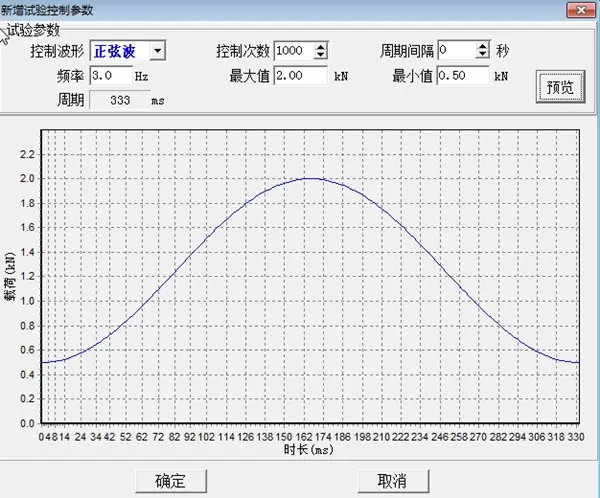
Dynamic Direct Shear Instrument Detail

Key Output Parameters

  • Dynamic shear stress (τ d_d): The peak or effective value of dynamic shear force.
  • Dynamic shear strain (γ d_d): The ratio of shear displacement to specimen height.
  • Dynamic shear modulus (G_d): The ratio of dynamic shear stress to dynamic shear strain (stiffness index).
  • Damping ratio (D): Calculated via the hysteresis curve for energy dissipation capacity.
  • Pore water pressure ratio (r_u): Excess static pore water pressure relative to normal stress (liquefaction criterion).

Application Fields & Standards

Industries
  • Earthquake Engineering: Soil degradation under seismic loads.
  • Transportation Engineering: Roadbed deformation under vehicle cyclic loads.
  • Ocean Engineering: Seabed stability under wave action.
  • Geological Hazards: Friction characteristics of landslide sliding surfaces.
Standard Specifications
  • ASTM D3080 (Static Direct Shear Test, Partial Dynamic Expansion)
  • ISO 17892-10 (International Standard for Soil Testing)

Technical Parameters

Soil Sample SizeΦ 61.8mm × 20mm (Other options available)
Vertical PressurizationServo Pneumatic Control
Vertical Loading Range0-10KN (Adjustable based on sample area)
Vertical Deformation0-10mm (Accuracy: 0.01mm)
Horizontal Shear Load5KN
Vibration Frequency0-10Hz (Arbitrary setting)
Stress ControlDynamic Shear Stress 0-5kN (Accuracy: ± 2N)
Strain Control0.1-5mm/min (Sine wave loading waveform)
Amplitude0.08-1.5mm
Vibration SegmentsUp to 13 continuous vibration segments
Control MethodComputerized Servo Electric Control (Horizontal/Stress/Strain)
Data CollectionAdjustable frequency (2ms to 1000ms)

Frequently Asked Questions

What types of soil can be tested with this apparatus?
The apparatus is primarily designed for saturated fine-grained soils and sandy soils. Coarse-grained soils can also be tested using specific adjustments to the execution protocol.
What is the primary purpose of the dynamic shear stress-strain relationship test?
It is used to observe the hysteresis curve of the soil, which helps in calculating the dynamic shear modulus and damping ratio, essential for understanding soil stiffness and energy dissipation.
Does the system support seismic load simulation?
Yes, the Cyclic Direct Shear Test mode is specifically designed to apply periodic shear loads to simulate earthquake conditions and evaluate liquefaction potential.
What are the available vibration frequencies?
The vibration frequency can be set arbitrarily between 0-10Hz, allowing for a wide range of dynamic simulation scenarios.
How is the data recorded and analyzed?
The instrument uses a dynamic control acquisition instrument linked to computer software. It provides real-time display, storage, graphic drawing, and data export for precise engineering analysis.
Which international standards are met?
The equipment complies with major international standards including ASTM D3080 and ISO 17892-10 for soil testing.

Related Products