Custom Soil Dynamic Triaxial Test Apparatus Manufacturers, Suppliers

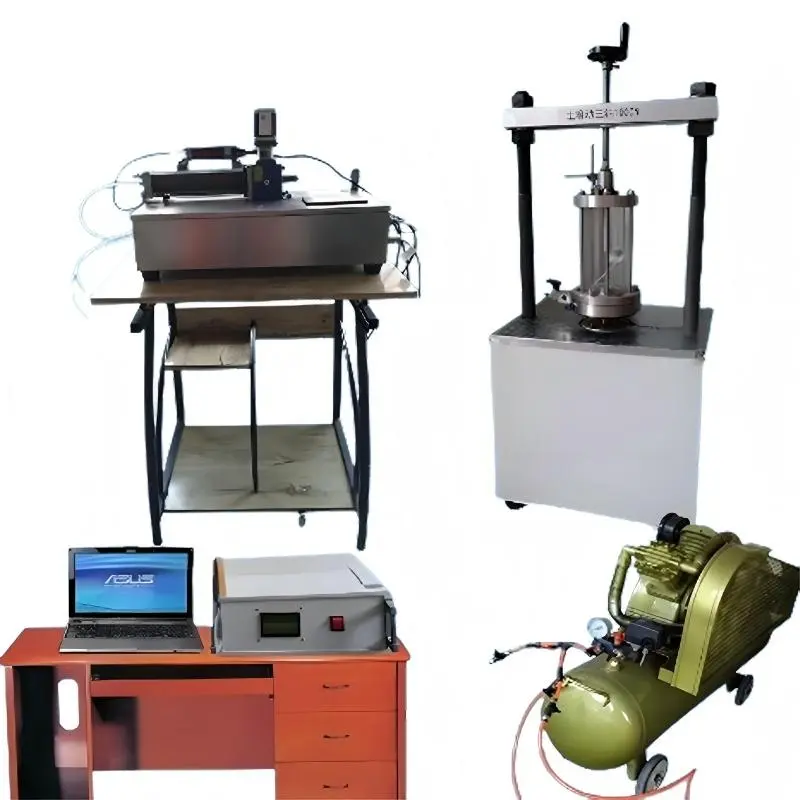
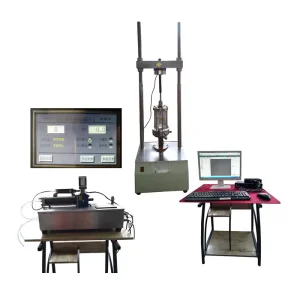
The Dynamic Triaxial Test Apparatus is an advanced geotechnical testing equipment used to study the stress-strain characteristics, strength deformation, and liquefaction properties of soil under dynamic loads such as earthquakes, traffic vibrations, mechanical vibrations, etc. It combines the static loading function and dynamic loading system of traditional triaxial apparatus, and can simulate the dynamic response of soil under complex stress conditions.


Experimental principle

Simulate the mechanical behavior of soil under earthquake or vibration loads:

Liquefaction potential assessment: Saturated sandy soil experiences an increase in pore water pressure under cyclic shear, leading to a reduction in effective stress to zero (liquefaction).

Dynamic modulus to damping ratio: Calculate the dynamic deformation characteristics of soil through hysteresis curves.

Dynamic strength analysis: Determine the failure stress threshold of soil under dynamic loads.

Product Description

🔬

Product Description

Cyclic Triaxial Test:
Apply periodic axial loads, observe the accumulation of pore water pressure and strain development, and determine the possibility of liquefaction (such as ASTM D5311).

Resonance column test (optional module):
Measure the shear modulus (G) and damping ratio (D) of soil under small strain.

K₀ Consolidation test:
Simulate the in-situ stress state of soil.
📊

Main Output Parameters

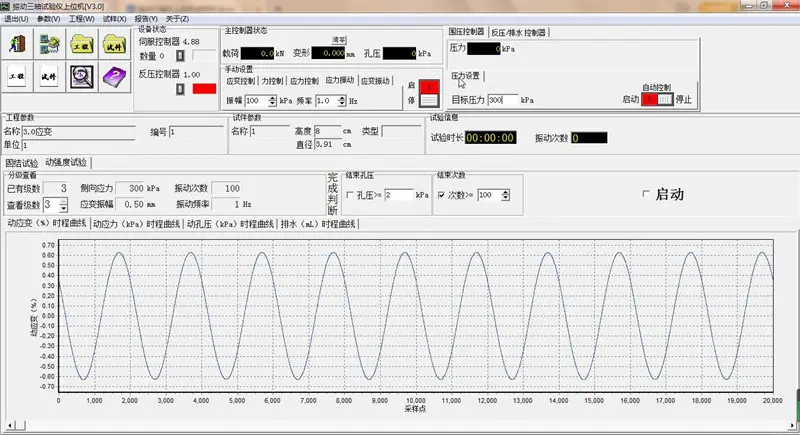
  • Liquefaction resistance: relationship curve between cyclic stress ratio (CSR) and liquefaction cycles (N).
  • Dynamic shear modulus (G) and damping ratio (λ): characterize the dynamic stiffness and energy dissipation capacity of soil.
  • Dynamic intensity curve: the relationship between the number of destructive vibrations and the ratio of dynamic stress.
  • Pore water pressure development curve: revealing liquefaction process.
Dynamic Soil Testing Parameters
🏢

Application Area

Equipment Detailed View
  • Seismic engineering: Evaluating the stability of foundations and slopes during earthquakes.
  • Geotechnical Engineering: Dynamic Response Analysis of Subway and Bridge Foundations.
  • Research and Education: Study of Soil Dynamics Characteristics (such as Sand Liquefaction and Clay Dynamic Creep).

Standard Specification

Compliant with ASTM D3999 (dynamic modulus), ASTM D5311 (cyclic triaxial).

⚙️

Technical Parameters

Host System

Electric cylinder piston stroke: 100mm
Electric cylinder: maximum output 10KN (Optional: 5KN, 50KN, 100KN)
Pressure sensor: 0-10KN accuracy 0.05N
Deformation: 0-100mm (Accuracy: 0.001mm, zero reset support)
Loading speed: 0.001-50mm/min
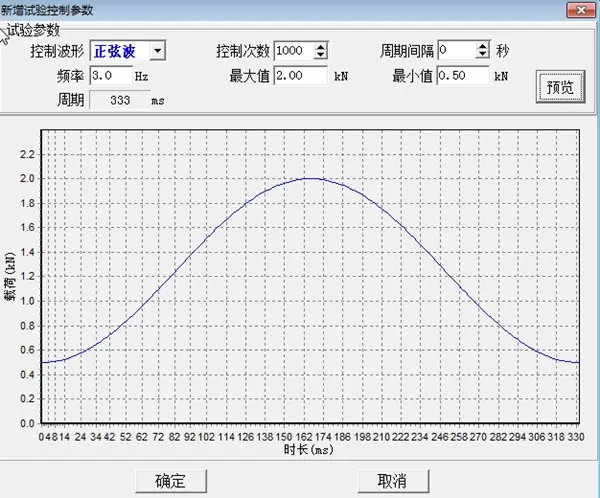
Vibration frequency: 0.1-5.0Hz (Stress-strain control)
Voltage: 220V 50Hz | Power: 5KW

Confining Pressure Loading

Range: 0-1000KPa (Gas or water pump source)
Test medium: Liquid or gas
Control: Fully computer-controlled
Display accuracy: 1KPa

Pressure Control Systems

Reverse Pressure: 0-1MPa, 0.02KPa adjustable (220V/250W)
Variable Body: Displacement accuracy 0.1mL
Pore Pressure Transmitter: 0-300KPa, accuracy 0.5KPa

Pressure Chamber & Servo

Chamber Size: Φ 39.1mm (Standard), 61.8mm, 101mm (Optional)
Servo Control: ISD platform intelligent system, 32-bit DSP control core, DTE real-time OS.
Sampling Rate: 10,000 times/sec measurement and control frequency.
Frequently Asked Questions

1. What is the main application of the Cyclic Triaxial Test?
It is primarily used to evaluate the liquefaction potential of soil and observe pore water pressure accumulation under periodic axial loads, essential for seismic engineering.
2. Does the equipment comply with international standards?
Yes, the system is fully compliant with ASTM D3999 for dynamic modulus and ASTM D5311 for cyclic triaxial testing.
3. Can the loading capacity be customized?
The standard electric cylinder output is 10KN, but we offer optional specifications including 5KN, 50KN, and 100KN to meet different testing requirements.
4. What are the available pressure chamber sizes?
The factory standard is 39.1mm in diameter. However, 61.8mm and 101mm diameter chambers are also available and can be freely selected.
5. What makes the servo control system unique?
It uses a high-performance 32-bit DSP core with a measurement frequency of 10,000 times per second, allowing for precise multi-channel closed-loop control required for dynamic testing.
6. Can this system perform small strain measurements?
Yes, with the optional resonance column module, the system can measure shear modulus and damping ratios under small strain conditions.

Related Products