Custom Automatic Soil Resilient Modulus Tester CE Certified Elastic Modulus Tester Supplier, Pricelist

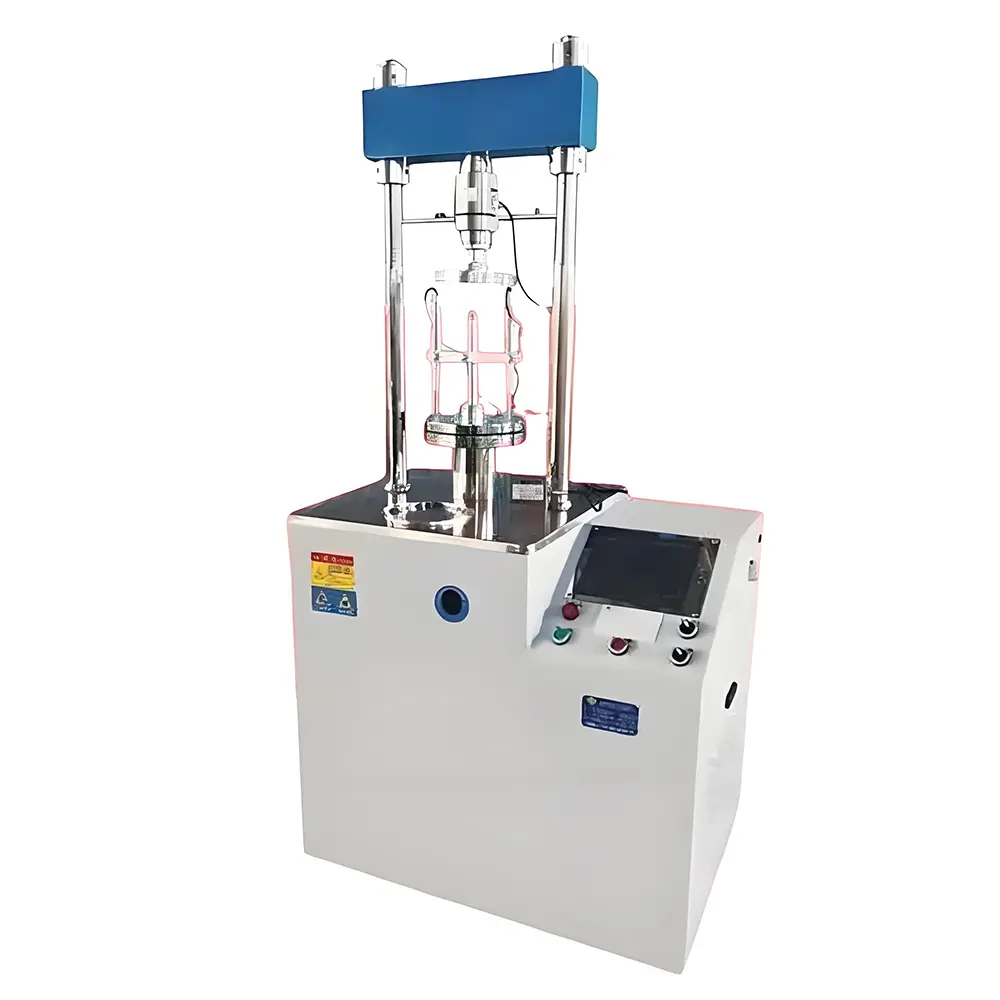
An automatic soil resilient modulus tester measures the rebound change of fine-grained soil samples with different moisture contents and densities under graded loading, and calculates the resilient modulus under each load level.

Product Description

1

Equipment Composition

The soil resilient modulus tester is simple to operate, has good stability, high accuracy, and a wide testing range. It is suitable for uniaxial compression of soil under specified conditions to determine the resilient modulus of the specimen before and after damage.

Performance characteristics and functions:
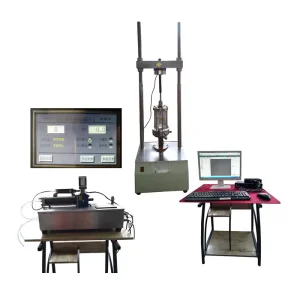
The soil resilient modulus test mainly consists of a main unit, a tensioning mechanism unit, an automatic control system unit, a computer, and a dedicated software data acquisition system unit.
2

Technical Parameters

01. Rated Load: 0~5, 10, 50, 100KN (Optional); Graduation Value: ±1%
02. Maximum Lifting Distance: 120mm
03. Lifting Speed: Stepless speed adjustment 0.001~50mm/min
04. Deformation Sensor: 0~20mm; Accuracy: 0.001mm
05. Stress Control: Utilizes a servo motor with arbitrary setting, constant force, and creep data acquisition.
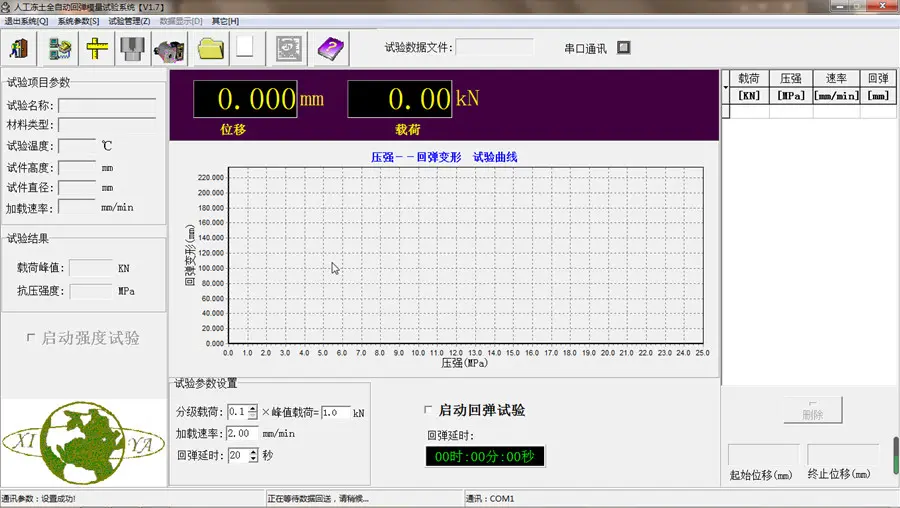
06. Data Acquisition: Dedicated software for real-time display and storage of force, deformation, and time curves.
07. Power Supply: 220V/380V; Power: 0.55KW
08. Control System: Fully digital closed-loop system driven by a servo/frequency conversion motor.
?

Frequently Asked Questions

What is the primary use of the Soil Resilient Modulus Tester?
It is designed for uniaxial compression of soil to determine the resilient modulus of specimens before and after damage under specified conditions.
What are the available rated load options?
The instrument offers optional rated loads ranging from 0-5KN, 10KN, 50KN, up to 100KN, with a graduation accuracy of ±1%.
How accurate is the deformation measurement?
The system uses a high-precision deformation sensor with a range of 0-20mm and an accuracy of 0.001mm.
Can the experimental data be exported or analyzed?
Yes, the dedicated software connects to a computer to perform real-time data acquisition, display curves, and store raw data for further analysis and evaluation.
What type of motor drives the loading process?
The loading process is primarily driven by a servo or frequency conversion motor, utilizing a brand-new fully digital closed-loop control system.
What is the speed range for the lifting mechanism?
The instrument features stepless speed adjustment, allowing for lifting speeds ranging from 0.001 to 50mm/min.

Related Products