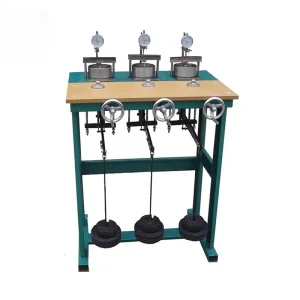
High-Quality Laboratory fully automatic digital vibration triaxial tester Suppliers, Quotes

The purpose of the vibration triaxial tester is to determine the elastic modulus of saturated soil, soil samples or the stress, strain and pore water pressure changes of samples mixed with cement, gravel or soil under dynamic action, so as to determine its destructive strength (including liquefaction) under dynamic action, dynamic elastic modulus and damping ratio when the strain is greater than 10-4 and other dynamic characteristic indicators (large elastic modulus).

Product Description

🎯Purpose and Scope of Application

Loading methods are divided into two types: upper loading and lower loading.

The purpose of the vibration triaxial tester is to determine the elastic modulus of saturated soil, soil samples or the stress, strain and pore water pressure changes of samples mixed with cement, gravel or soil under dynamic action. This allows for the determination of:
  • Destructive strength (including liquefaction) under dynamic action.
  • Dynamic elastic modulus and damping ratio (when strain is greater than 10-4).
  • Other critical dynamic characteristic indicators.

⚙️Composition of the Instrument

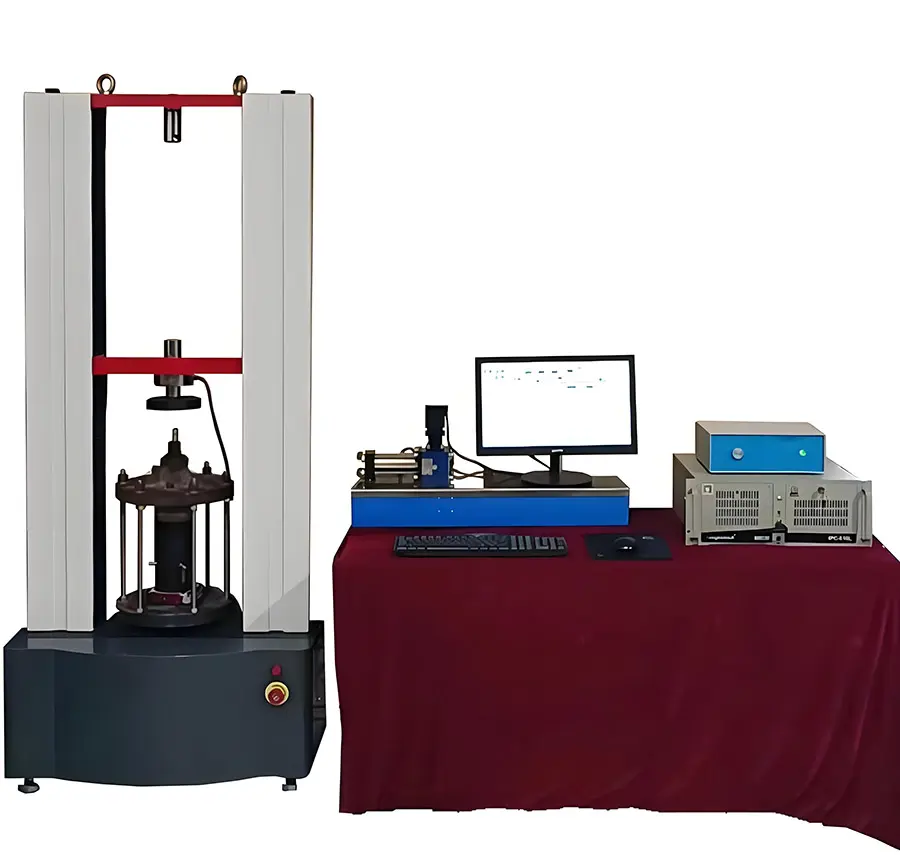
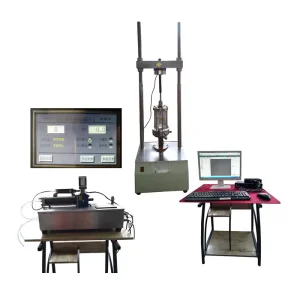
This electromagnetic servo vibration triaxial instrument consists of several high-precision integrated systems:

01. Main Unit

Includes a pressure chamber and a specialized servo electric cylinder for precise mechanical testing.

02. Servo Control System

Electromagnetic servo control used for axial vibration, applying axial dynamic stress, and managing the servo electric cylinder.

03. Pressure Control

Manages confining pressure and back pressure, including all necessary pipelines, air sources, and water sources.

04. Software System

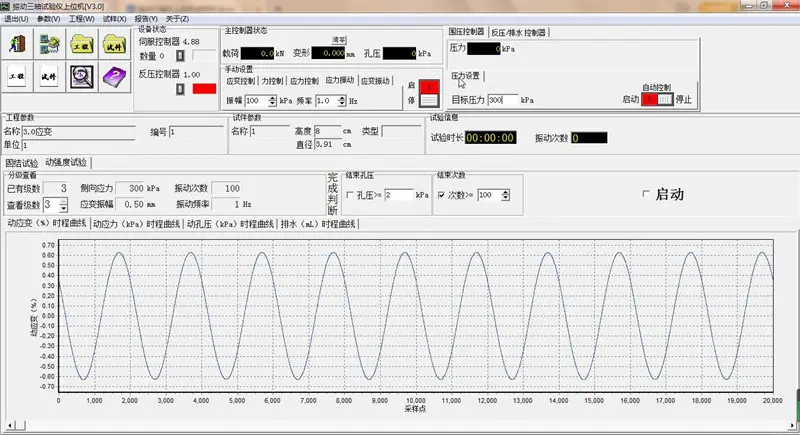
Computer-controlled data acquisition and processing. Records the entire test process and generates automated reports and curves.

📊Technical Parameters

Main Unit Specifications

Piston Stroke:100mm
Max Output:10KN (5/50/100KN Optional)
Pressure Sensor Accuracy:0.05N
Deformation Accuracy:0.001mm
Loading Speed:0.001-50mm/min
Vibration Frequency:0.1-5.0Hz
Power / Voltage:5KW / 220V 50Hz

Loading & Control Systems

Confining Pressure Range:0-1000KPa
Back Pressure Range:0-1MPa (0.02KPa adj.)
Discharge Volume:0.1mL
Pore Pressure Accuracy:0.5kPa
Chamber Options:Ø39.1, Ø61.8, Ø101mm

Advanced Intelligent Measurement

The servo control system is based on the ISD platform with a built-in 32-bit floating-point DSP control core. Realizing arbitrary multi-channel closed-loop control, it features a measurement and control frequency of 10,000 times/second, meeting high-standard dynamic test requirements.
Frequently Asked Questions

Q1: What materials can be tested with the vibration triaxial tester? It is designed for saturated soil, soil samples, and mixtures containing cement, gravel, or soil to analyze their dynamic characteristics.
Q2: What is the maximum frequency of the axial vibration? The electric cylinder supports a vibration frequency range of 0.1Hz to 5.0Hz, allowing for versatile stress-strain control.
Q3: How accurate is the data acquisition system? The system utilizes a measurement and control frequency of 10,000 times per second with a 32-bit floating-point DSP core, ensuring high-precision real-time recording.
Q4: Are there different pressure chamber sizes available? Yes. While the factory configuration is Ø39.1mm, options for Ø61.8mm and Ø101mm are available.
Q5: Can the system automatically generate test reports? Yes, the integrated computer control and software system automatically generate test record sheets and curve reports upon completion of the test.
Q6: What is the output capacity of the electric cylinder? The standard maximum output is 10KN, but other specifications like 5KN, 50KN, and 100KN are optional depending on your requirements.

Related Products