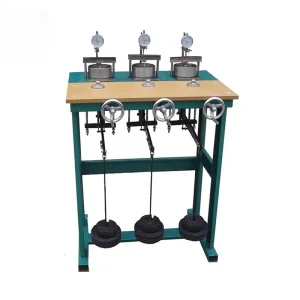
OEM Automatic testing device for soil (coarse-grained soil, gravel) permeability coefficient Test Equipment Manufacturer, Pricelist

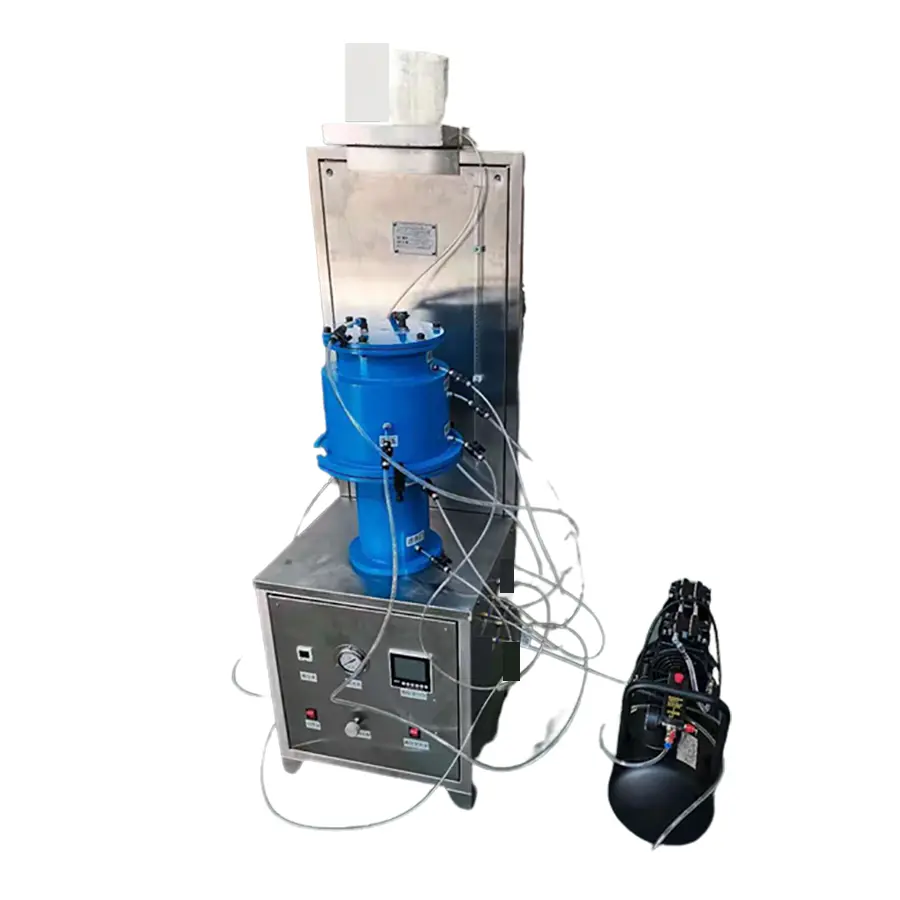
The Soil Permeability Tester is used to measure the hydraulic permeability, interface-to-bottom permeability, and seepage performance of grouting, expansion, and curing agents in soils (coarse-grained soils and gravel) under constant and variable head pressures.

Product Description

Equipment Composition

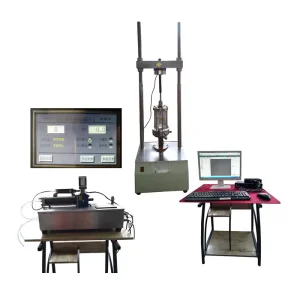
The permeability tester consists of a water tank, a constant water pressure device, a specimen sleeve, a sleeve cover, a rubber seal, a micro-differential pressure gauge, a porous plate, a latex membrane, a vacuum pump, a valve, connecting pipes, a pore pressure acquisition device, and data acquisition software.
Technical Parameter
1. Electric Pressure Test Pump
  • Maximum operating permeate pressure: 0.8 MPa
  • Water pressure range: 0-800 kPa (adjustable constant pressure)
  • Air pump power: 0.75 kW; Voltage: 220V 50 Hz
2. Steel Cylinder
  • Upper cylinder: ID 180mm ± 0.2mm, Height 250mm, 3 pressure taps
  • Lower cylinder: Height 250mm, 10mm wall/bottom, 4th pressure tap
  • Specimen dimensions: Φ150×150 mm (JTG3420-2020) or Φ100×50 mm (CJJ/T135-2009)
  • Perforated plate: Φ180 mm, 10 mm thick
3 & 4. Accessories & Bladder
  • Graduate cylinder: 50 ml capacity, 0.1 ml accuracy
  • Soft bladder: Hollow latex, ID 150mm, OD 182mm, Height 150mm
  • Sealing mechanism: Inflation pressure prevents side leakage
5. Vacuum Pump
  • Evacuation Rate: 3.6/h; Power: 150W
  • Ultimate Vacuum: -0.1 MPa to 0 (adjustable)
  • Accuracy: 0.25; Response Time: ≤0.5 seconds
6. Data Acquisition System
  • 4 Micro-Differential Manometers
  • Pressure range: -100 to 300 kPa
  • Repeatability: ±0.02 kPa
  • Auto-analysis of pore pressure changes over time
7. Vacuum Saturation (Optional)
  • 2 Acrylic glass chambers (4300ml each)
  • Vacuum range: -0.1 MPa to 1 atm
  • Time range: 0 to 99 hours 99 minutes
Frequently Asked Questions
Q1: What is the maximum operating pressure for the permeability tester?
The system supports a maximum operating permeate pressure of 0.8 MPa, with a water pressure range of 0-800 kPa that can be adjusted for constant pressure testing.
Q2: Which specimen dimensions are compatible with this equipment?
The standard cylinder supports specimens of Φ150 × 150 mm (following JTG3420-2020) and Φ100 × 50 mm (following CJJ/T135-2009).
Q3: How does the soft bladder function within the cylinder?
The hollow latex soft bladder is inflated to generate pressure against the cylinder wall. This creates a tight seal that prevents water from bypassing the specimen during the permeation test.
Q4: Does the software record data automatically?
Yes, the pore pressure data acquisition instrument and dedicated software automatically capture and record pressure changes, providing real-time time-analysis during the test.
Q5: What is the benefit of the optional Specimen Vacuum Saturation Device?
The saturation device allows for pre-saturating specimens in two 4300ml acrylic glass chambers, which significantly shortens the overall testing time and improves data accuracy.
Q6: What are the power and environmental requirements for operation?
The system requires a 220V 50Hz power supply. It is designed to operate effectively in environments ranging from -10°C to 60°C.

Related Products