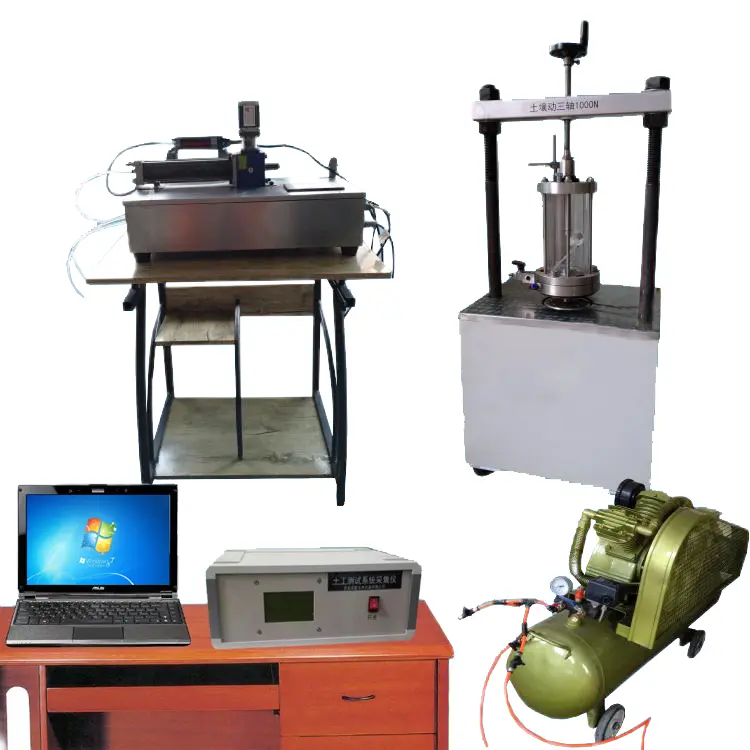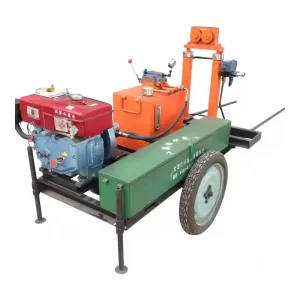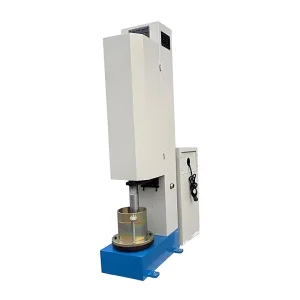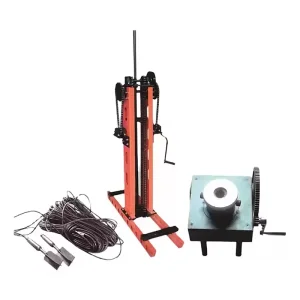
Wholesale Soil triaxial resonant column tester Manufacturer, Manufacturers

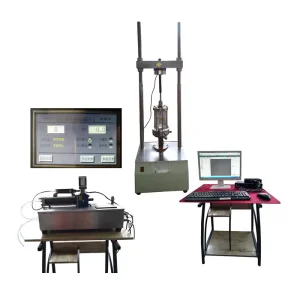
The Soil Triaxial Resonance Column Tester is an advanced geotechnical instrument used to measure the dynamic mechanical properties of soil in a small strain range (usually 10 ⁻⁶~10 ⁻ ³). It combines the advantages of traditional triaxial testing and resonance column technology, and can simultaneously study dynamic parameters such as shear modulus (G) and damping ratio (λ), as well as static deformation characteristics of soil. Here is its detailed description:

Major function

Dynamic characteristic testing: Determine the shear modulus (G) and damping ratio (λ) of soil under small strain using resonance frequency method.

Static characteristic testing: supports conventional triaxial tests (such as UU, CU, CD) to obtain parameters such as shear strength (c, φ) and deformation modulus.

Wide coverage of strain range: seamless transition from small strain (elastic zone) to large strain (nonlinear failure zone).

-Multi field coupling (optional): can integrate temperature control and seepage systems to simulate complex environments (such as frozen soil and saturated soil).

Product Description

Core Components

Loading System

Axial loading: Using servo motors or hydraulic systems to achieve static loading (stress/strain control) and dynamic excitation (sine wave, random wave).

Confining system: Apply constant/variable confining pressure (0-2 MPa, adjustable) through air pressure or hydraulic pressure to simulate the stress state of soil at different depths.

Reverse pressure system (optional): Used for B-value detection and pore water pressure control of saturated soil samples.

Soil Resonant Column Apparatus Core Components

Resonant Column System

Drive device: Electromagnetic or mechanical exciter that generates controllable frequency torsional vibration (usually 0.1-200 Hz).

Sensor Group

Torque sensor: measures input torque.

Accelerometer/displacement sensor: monitors the vibration response at the top of the soil sample.

Pore pressure: Pore water pressure sensor for saturation testing.

Data Acquisition and Control Unit

Dynamic signal analyzer: Real time acquisition of vibration frequency, amplitude, phase difference, calculation of G and λ.

Control software: Automatically adjust the excitation frequency to resonance state, generate G - γ (shear modulus shear strain) and λ - γ curves.

Product Features

High precision strain measurement: The resolution of small strains can reach 10⁻⁶, meeting the requirements of elastic zone testing.
Broadband excitation: Supports continuous loading from low frequency (static) to high frequency (dynamic).
Multi functional integration: One device is compatible with resonance column, three-axis, and dynamic three-axis tests.
Intelligent analysis software: Automatically identify resonance frequency and correct the influence of boundary conditions; Output G - γ and λ - γ curves, fit Hardin Drnevich and other constitutive model parameters.

Application Fields

Earthquake Engineering: Evaluating the dynamic characteristics of soil for site seismic response analysis.
Transportation Engineering: Study the stiffness degradation of roadbed soil under cyclic loading.
Marine Rock and Soil: Dynamic response of seabed soft soil under wave loads.
Research and Education: Study on the Mechanism of Small Strain in Soil and Verification of constitutive Models.

Technical Standards & Parameters

Applicable Standards: ASTM D4015 (Resonance Column Test Standard) & GB/T 50123 (Standard for Soil Test Methods).

The Soil Resonant Column Apparatus experiment is suitable for saturated sand, silt, and clay. It requires preparing three or more samples with the same properties and conducting the test under different ambient pressures (typically 100, 200, 300, and 400KPa).

Technical Parameters

1. Torque: Powerful 0-50Nm, accuracy 0.01Nm

2. Pore pressure: 0-1MPa

3. Confining pressure: Set arbitrarily from 0 to 1MPa

4. Vibration frequency: 0-10Hz

5. Amplitude: 0.08-1.2mm

6. Data Handling: Real time collection, display, and export

7. Sample size: Φ 50 × 100mm
Frequently Asked Questions

Q1: Which international standards does the Resonant Column Apparatus comply with? A1: It complies with ASTM D4015 and GB/T 50123 standards for soil test methods.
Q2: What is the measurement resolution for small strains? A2: The equipment provides high precision measurement where the resolution of small strains can reach 10⁻⁶.
Q3: Can this device be used for dynamic three-axis tests? A3: Yes, this multi-functional device is compatible with resonance column, three-axis, and dynamic three-axis testing.
Q4: What types of soil can be tested with this apparatus? A4: It is ideally suited for testing saturated sand, silt, and clay samples.
Q5: What are the typical confining pressure settings for experiments? A5: While adjustable from 0-1MPa, common engineering applications use 100, 200, 300, and 400KPa.
Q6: Does the software support automatic resonance frequency identification? A6: Yes, the intelligent analysis software automatically identifies resonance frequency and corrects boundary condition influences.

Related Products