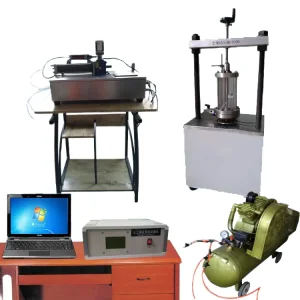
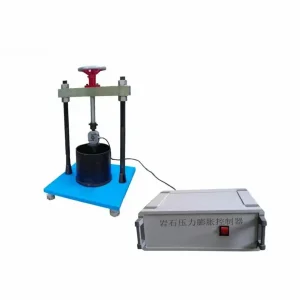
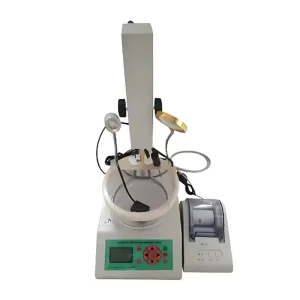
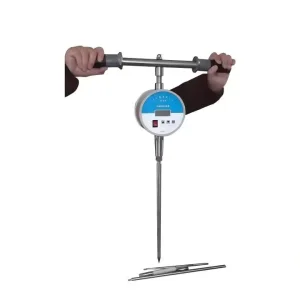
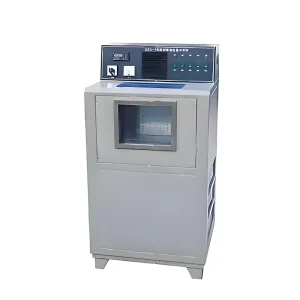
Explore our elite range of geotechnical, asphalt, and structural analytical equipment engineered to exceed international ASTM and AASHTO test directives.
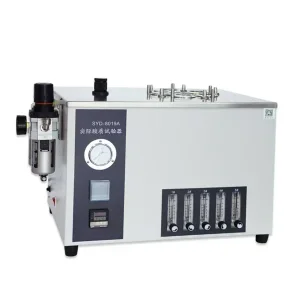
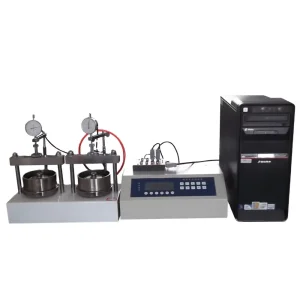
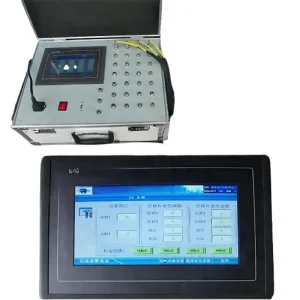
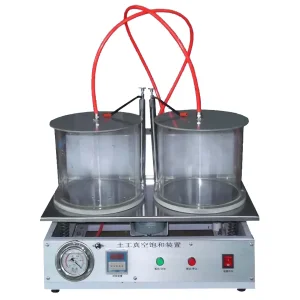
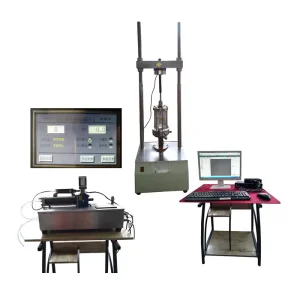
Viscosity stands as a fundamental physical property governing the behavior of fluids under stress. In the context of civil engineering, petrochemical analytics, and material science, two primary classifications of viscosity dictate how materials perform under shear forces and gravitational flow: Dynamic Viscosity (η) and Kinematic Viscosity (ν).
Dynamic Viscosity, often termed absolute viscosity, measures a fluid's internal resistance to flow when a shear force is actively applied. Represented in Pascal-seconds (Pa·s) or centipoise (cP), dynamic viscosity is critical when analyzing high-shear environments, such as the pumpability of cementitious slurries or the frictional resistance within dynamic bearing surfaces.
Kinematic Viscosity represents the resistive flow of a fluid under the influence of gravity. Measured in square meters per second (m²/s) or centistokes (cSt), it is calculated by dividing the dynamic viscosity by the fluid's density (ρ). In asphalt binders, lubricants, and structural coatings, kinematic viscosity dictates how a material spreads, settles, and solidifies over time.
Accurate control over these variables is critical for structural longevity. High-precision viscometer manufacturing forms the technical backbone of modern infrastructure quality control. By tracking both dynamic and kinematic properties, civil laboratories can guarantee that structural components maintain stability under extreme dynamic loads and environmental fluxes.
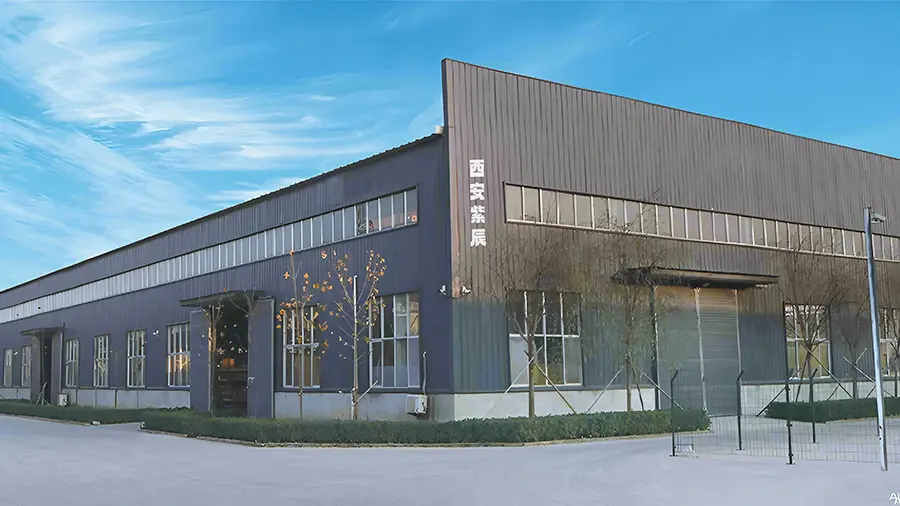
With an established history spanning over 15 years in civil engineering research and manufacturing, Xi'an Zealchon Electronic Technology Co., Ltd. has cemented its status as an elite global OEM partner. Located in the high-technology industry development zone of Xi'an, China, our specialized building area covers 7,500 square meters of dedicated production and clean-room research space.
Zealchon operates dual-core research hubs: one dedicated to civil engineering testing apparatus, and the other specializing in semiconductor laser research and development. Our signature trademark, "Xiya", has received honors as a recognized trademark of Shaanxi Province, serving as a hallmark of reliable design and regulatory compliance.
Our engineering research team is founded by elite scientists and professors from prestigious institutions including Chang'an University Highway College, Air Force Engineering University, and Xi'an University of Technology. Through this deep academic synergy, we have engineered and brought to market a portfolio of core technological apparatuses that bridge the gap between abstract academic theory and robust, field-tested reality.
A comparative overview of measurement mechanics, standard units, and primary engineering test environments.
| Property Parameter | Dynamic Viscosity (Absolute) | Kinematic Viscosity (Relative to Gravity) | |
|---|---|---|---|
| Physical Definition | Internal resistance of fluid layers shifting under external shear stresses. | Fluid resistance to flow under the force of gravity (influenced by density). | |
| Primary Unit Systems | Pascal-seconds (Pa·s), milliPascal-seconds (mPa·s), Poise (P), Centipoise (cP) | Square meters per second (m²/s), Stokes (St), Centistokes (cSt) | |
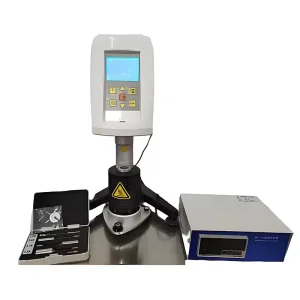
| Measurement Apparatus | Rotational Viscometers (e.g., Brookfield), Cone and Plate Systems | Capillary Viscometers (e.g., Ubbelohde, Cannon-Fenske), Orifice Viscometers | |
| Primary Civil Engineering Application | Asphalt binder performance at high pumping temps (ASTM D4402), polymer modified bitumen. | Liquid asphalt classifications, fluid soil dynamics, dynamic run-off rate determination (ASTM D2170). | |
| Mathematical Formula | η = τ / γ (Shear Stress / Shear Rate) | ν = η / ρ (Dynamic Viscosity / Density) |
Why leading civil engineering labs and global procurement agencies rely on Zealchon's production ecosystem.
Operating from the high-tech industrial hubs of Xi'an allows direct, zero-lag access to premium optical sensor elements, thermal stabilization chambers, and high-performance alloy components. This tight integration translates to shortened development pipelines and highly competitive cost profiles without compromising instrument accuracy.
By co-developing hardware architectures alongside researchers from Chang'an University Highway College, Zealchon ensures that every product represents the cutting edge of material research. This synergy bridges the gap between academic accuracy and the rugged build quality required for tough construction site testing.
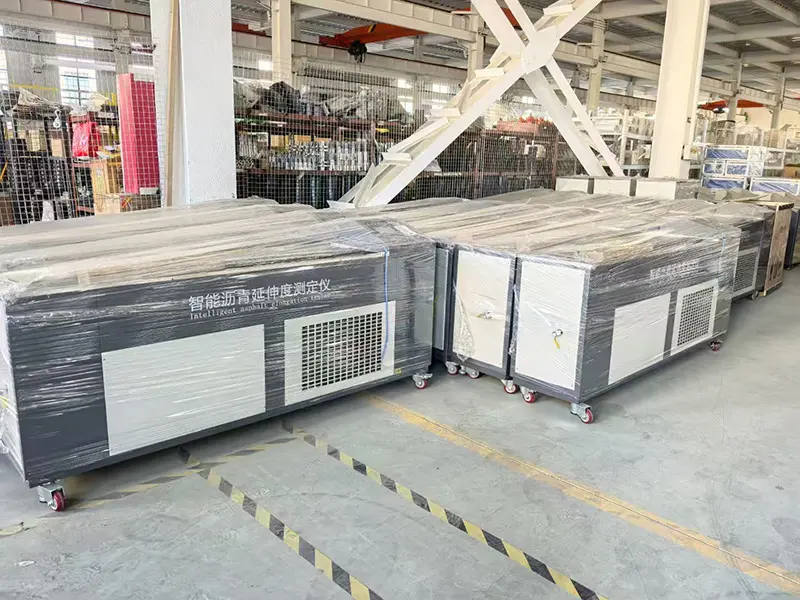
Our facility houses dynamic processing technologies, including high-precision CNC lathes, grinding stations, bending, and specialized argon arc welding units. Controlling the metalworking chain allows us to maintain strict tolerances, guaranteeing long-term physical alignment for structural frame integrity.
The global materials testing market is rapidly transitioning from manual, timing-based viscometers to automated, cloud-enabled diagnostic units. Standardizing laboratory parameters demands smart instruments that automatically log density, temperature, and shear rates, outputting data directly to Lab Information Management Systems (LIMS). This eliminates human reading errors and ensures complete traceability.
Because viscosity is highly sensitive to thermal fluctuations, modern standard operating procedures require accuracy to within ±0.01°C. Zealchon has developed digital thermal feedback systems that continuously regulate internal temperature zones, meeting the stringent calibration standards of ASTM D2170 and ASTM D4402.
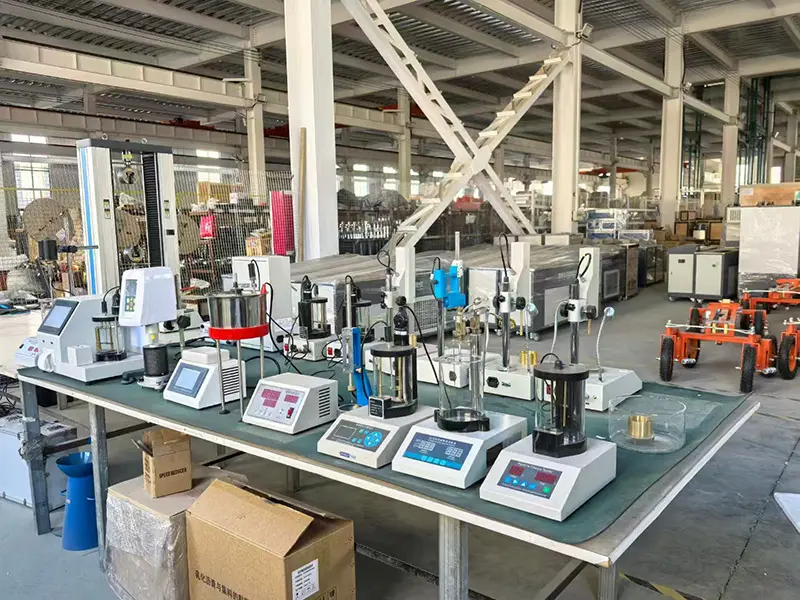
Every Zealchon instrument is shipped with complete calibration certificates traceable to Chinese national metrology standards and international benchmark protocols. Our academic partnerships verify that all measurement methods adhere to the highest scientific standards, providing field engineers with robust, reliable, and legally defensible data.
Expert answers to common technical queries from procurement managers and laboratory directors.
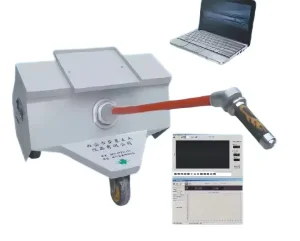
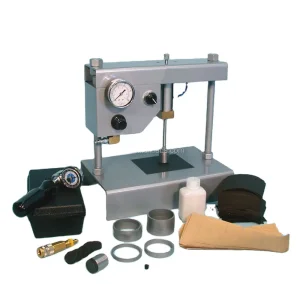
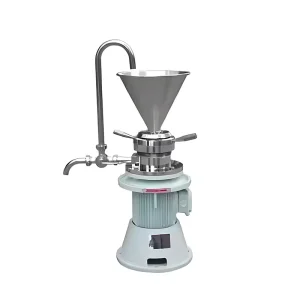
High-durability lab tools for asphalt emulsions, profile analysis, dynamic consolidation, and absolute wax content determination.
 Zealchon Electronic